
Tyne kittiwakes — the urban colony
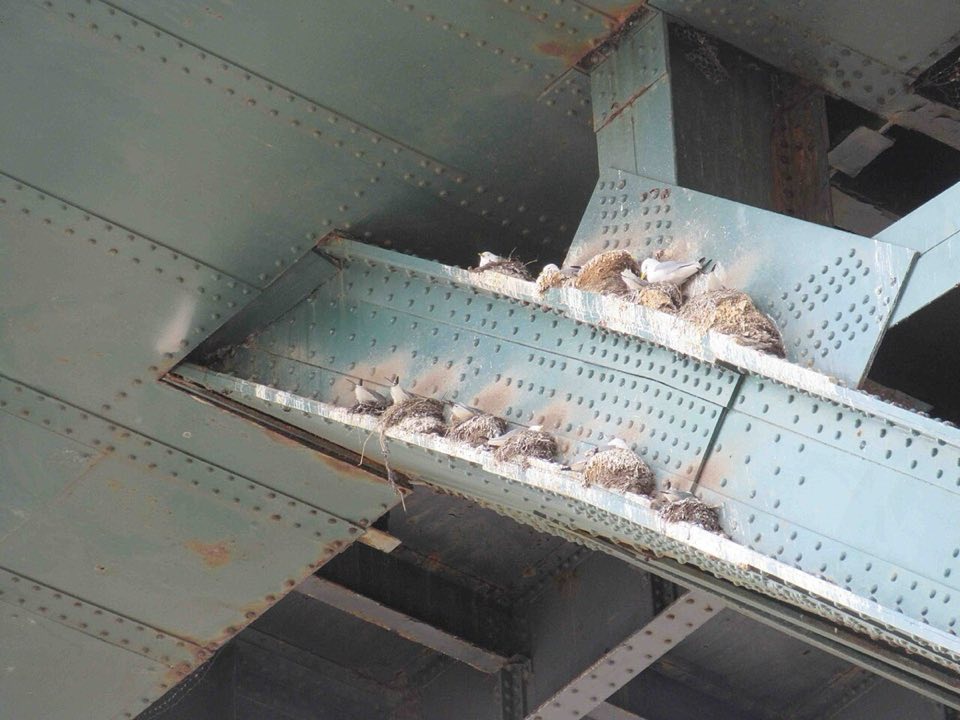
Black-legged kittiwake (Rissa tridactyla). Newcastle–Gateshead Quayside, United Kingdom.
Best time: 15 May – 15 Jul (May to July). Where: Tyne Bridge, Newcastle, BALTIC Centre for Contemporary Art, Gateshead, Saltmeadows kittiwake tower, Gateshead (United Kingdom). Time of day: The colony calls all day.
- You can go on your own
- Free
- No binoculars needed
- Sound 4/5
Open it in the interactive calendarSunrise and sunset listening times for the day you pick, and the map.
When is the best time?
Peak: 15 May – 15 Jul. Mid May to mid July (chicks calling)
Active from 1 Mar to 15 Aug (March to August) in a typical year.
Time of day
The colony calls all day; go from first light to about 07:00 before the Quayside wakes (Sunday best), and again after 21:00 when traffic drops.
- Quiet Quayside: 15 min before sunrise → 07:00
- Evening lull: 21:00 → sunset
What will you hear?
About 800 pairs of oceanic gulls calling 'kitti-wake' from the Tyne Bridge girders and the Baltic art gallery ledges, echoing between the bridges over the river and city traffic.
Binoculars?
No binoculars needed. Birds on bridge girders and gallery ledges a few metres above the Quayside.
Where to go
- Tyne Bridge, Newcastle — Largest colony on the bridge girders; road traffic overhead, but the underside of the bridge gives a strong echo. Map
- BALTIC Centre for Contemporary Art, Gateshead — Ledges on the building; live kittiwake camera and viewing platform. Map
- Saltmeadows kittiwake tower, Gateshead — Purpose-built nesting tower downstream, quieter surroundings. Map
How to go on your own, and what it costs
Walk the Quayside on both banks — under the Tyne Bridge, along the BALTIC riverside and downstream to the Saltmeadows tower — all public, free, any hour. Metro to Central Station or Gateshead and walk down.
Cost: Free.
Field-recording notes
The world's furthest-inland kittiwake colony — a nature-meets-city piece where traffic is part of it. Bridge-maintenance netting and deterrents change year to year; the Tyne Kittiwake Partnership tracks colony locations. Early Sunday mornings are the quietest.
Sources
Similar spectacles
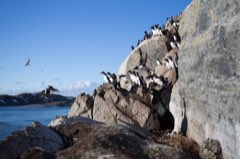 Hornøya and Gjesværstappan: Arctic seabird cliffsA guillemot wall at arm's length: massed growling and trumpeting, kittiwake screaming, puffin grunts, Brünnich's guillemots' lower calls; Arctic surf; at Gjesværstappan the gannet colony's grating and the constant wing-noise of puffins by the hundred thousand.
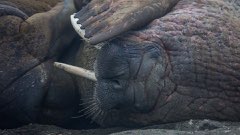 Svalbard: Arctic summer cliffs, walrus and ternsLittle auk colonies — a shrill, laughing chorus from scree slopes by the hundred thousand; Brünnich's guillemot walls (Alkefjellet) with birds pouring off 100 m dolerite cliffs; arctic terns in a screaming defensive cloud in Adventdalen; walrus grunts and snorts on a haul-out; calving glaciers.
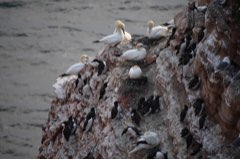 Helgoland Lummenfelsen: guillemots, gannets and the 'Lummensprung'Germany's only seabird cliff: guillemot growls, kittiwake screaming, gannet colony grating, fulmar cackles; at the jump, chicks peeping and adults calling them down to the sea 40 m below.
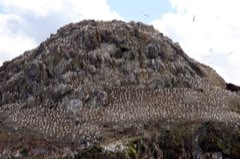 Sept-Îles: gannets on Rouzic, puffins and auksFrance's only gannet colony (about 14,000 pairs on Rouzic) as a wall of grating calls from the boat, puffins and kittiwakes on the sea, and the Atlantic swell against the granite.
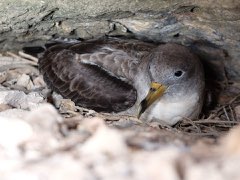 Shearwater colonies at night, Lastovo archipelagoScopoli's shearwaters wailing and cackling overhead and from burrows — the 'crying baby' chorus of Mediterranean islets; Yelkouan's higher nasal calls; waves on rock, cicadas fading at dusk.
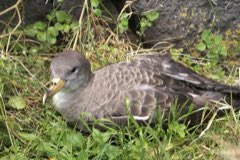 Berlengas: Cory's shearwaters calling over the island at nightHundreds of Cory's shearwaters wailing and sobbing over the island in the dark — the Atlantic's strangest chorus — with the yellow-legged gull colony grumbling, shags croaking on the ledges and the swell in the sea caves. On the mainland, the same birds raft silently off Cabo Carvoeiro at dusk.
More: all spectacles in the United Kingdom · seabird colonies · the United Kingdom in May · the United Kingdom in June · the United Kingdom in July