
Svalbard: Arctic summer cliffs, walrus and terns
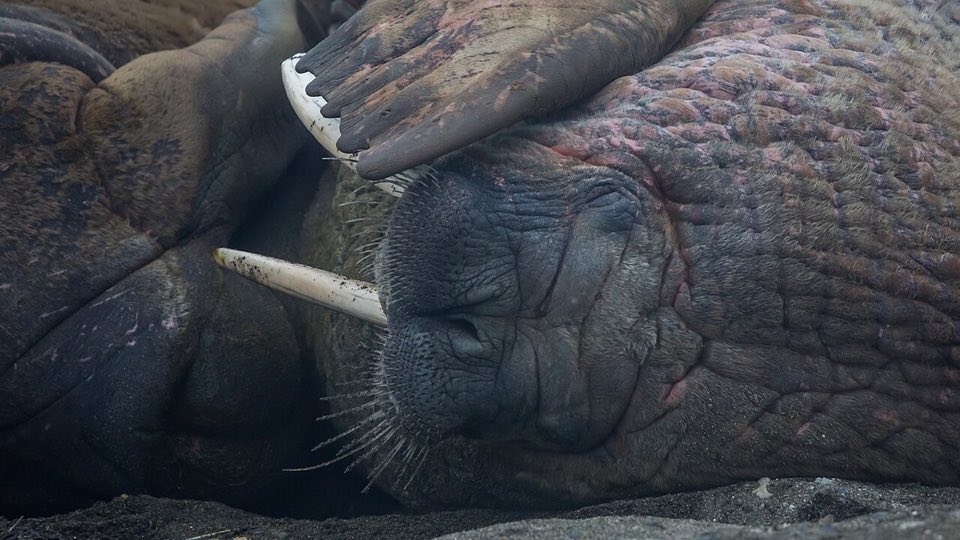
Brünnich's guillemot and little auk colonies, kittiwake, arctic tern, ivory gull, walrus haul-outs, Svalbard reindeer, arctic fox, polar bear (the reason for the rules). Svalbard (Longyearbyen, Isfjorden, Hinlopen), Norway.
Best time: 20 Jun – 31 Jul (June to July). Where: Longyearbyen – Adventdalen (arctic terns, reindeer, eiders), Bjørndalen / Fuglefjella (Isfjorden), Alkefjellet, Hinlopenstretet (Norway). Time of day: 24 h daylight.
- Partly on your own
- Paid trip only
- Binoculars essential
- Sound 5/5
Open it in the interactive calendarSunrise and sunset listening times for the day you pick, and the map.
When is the best time?
Peak: 20 Jun – 31 Jul. 20 June to end of July (colonies at full noise; sea ice permitting for the Hinlopen cliffs)
Active from 1 Jun to 31 Aug (June to August) in a typical year.
Time of day
24 h daylight; colonies are loudest around midnight and in the early morning, and the calmest air is usually 02:00–06:00. Expedition-ship zodiac times are set by the ship.
- Night and early morning peak: 23:00 → 06:00
What will you hear?
Little auk colonies — a shrill, laughing chorus from scree slopes by the hundred thousand; Brünnich's guillemot walls (Alkefjellet) with birds pouring off 100 m dolerite cliffs; arctic terns in a screaming defensive cloud in Adventdalen; walrus grunts and snorts on a haul-out; calving glaciers.
Binoculars?
Binoculars essential. Terns dive at your head in Adventdalen, but auk cliffs are viewed from zodiacs and walrus from 500 m; binoculars needed.
Where to go
- Longyearbyen – Adventdalen (arctic terns, reindeer, eiders) — Walkable from town within the 'polar bear safe' zone; tern colony by the road in July. Map
- Bjørndalen / Fuglefjella (Isfjorden) — Little auk and guillemot cliffs 10 km from Longyearbyen; rifle and guide required outside the settlement. Map
- Alkefjellet, Hinlopenstretet — Expedition-ship site; c. 60,000 pairs of Brünnich's guillemots on basalt columns; zodiac approach. Map
How to go on your own, and what it costs
Inside Longyearbyen's polar-bear-safe zone you can walk to Adventdalen (terns, eiders, reindeer) on your own; beyond it you must carry a rifle or hire a guide who does — Bjørndalen's little auk slopes are a guided walk. Alkefjellet and the Hinlopen cliffs are expedition-ship territory (zodiacs). 2025 rules: 500 m from walrus by sea, 300 m from bears, no disturbing colonies, drones by permit.
Cost: Expedition cruises and guided walks (check current prices); Longyearbyen surroundings free.
Free or no-guide alternative: Adventdalen from Longyearbyen is free and walkable without a guide: the arctic tern colony by the road in July, eiders and reindeer, within the settlement's safe zone.
Field-recording notes
Svalbard's environmental regulations are strict and tightening (2025 rules cap ship passenger numbers, set 500 m distance from walrus haul-outs by sea and 300 m from polar bears, and forbid disturbing birds at colonies). Outside Longyearbyen you must carry a firearm (or hire a guide who does) for polar bears — this is not optional. Expedition ships are the realistic access to the Hinlopen cliffs; zodiacs at idle under the cliff give excellent guillemot walls. Little auk slopes near Longyearbyen are walk-in with a guide. No drones without permission. It is cold, windy and 24 h light: the best calm is often 02:00–06:00.
Sources
Similar spectacles
 Helgoland Lummenfelsen: guillemots, gannets and the 'Lummensprung'Germany's only seabird cliff: guillemot growls, kittiwake screaming, gannet colony grating, fulmar cackles; at the jump, chicks peeping and adults calling them down to the sea 40 m below.
 Sept-Îles: gannets on Rouzic, puffins and auksFrance's only gannet colony (about 14,000 pairs on Rouzic) as a wall of grating calls from the boat, puffins and kittiwakes on the sea, and the Atlantic swell against the granite.
 Stora Karlsö: Baltic auk cliffs and the guillemot jumpThe growling, gurgling roar of a packed guillemot colony on limestone ledges, razorbill rasps, kittiwake-free Baltic quiet behind it; in late June the thin whistles of chicks calling to parents as they leap into the sea.
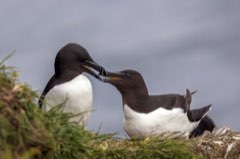 Ertholmene: Denmark's only guillemot and razorbill colonyGuillemots' growling and razorbills' rattle from Græsholm's rocks 100 m across the sound, eider crooning, gull colonies, the Baltic; at night on Christiansø, migrants and the fortress silence.
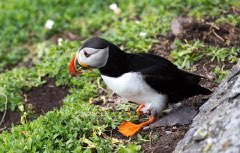 Irish seabird cities: Cliffs of Moher, Great Saltee and the SkelligsThe roar of 20,000 guillemots on the Moher ledges with kittiwakes screaming 'kitti-wake' and fulmars cackling; the Atlantic 200 m below; on Little Skellig the deafening, continuous growl of a gannet city heard over the engine; choughs' ringing calls on the cliff top.
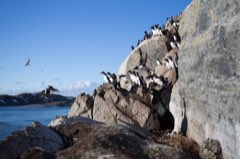 Hornøya and Gjesværstappan: Arctic seabird cliffsA guillemot wall at arm's length: massed growling and trumpeting, kittiwake screaming, puffin grunts, Brünnich's guillemots' lower calls; Arctic surf; at Gjesværstappan the gannet colony's grating and the constant wing-noise of puffins by the hundred thousand.
More: all spectacles in Norway · guillemots · seabird colonies · Norway in June · Norway in July