
Stora Karlsö: Baltic auk cliffs and the guillemot jump
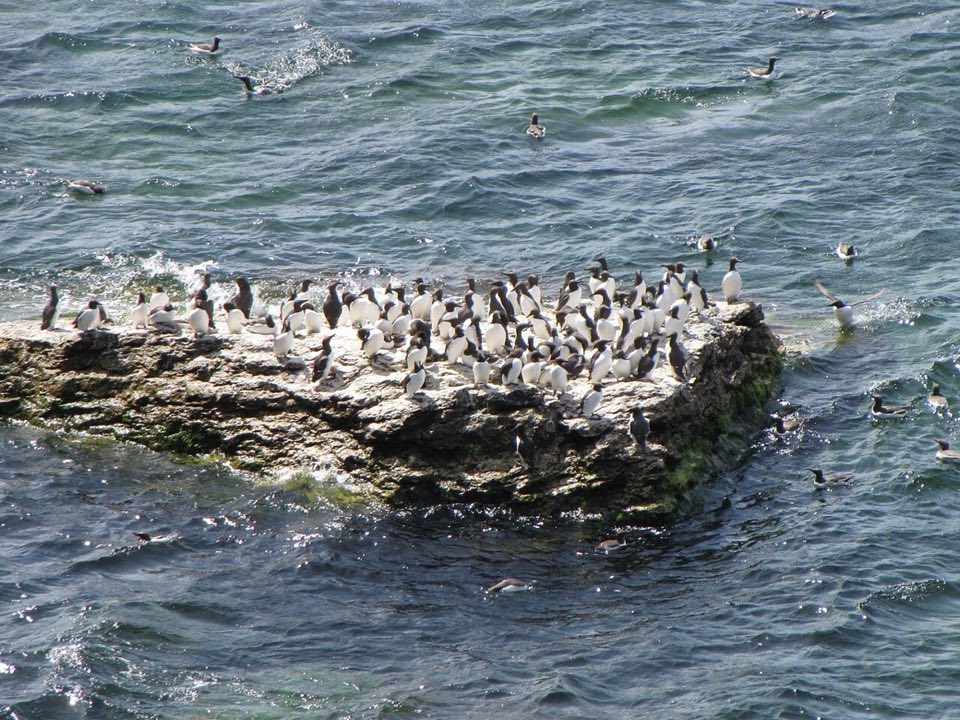
Common guillemot (c. 25,000 pairs), razorbill (similar numbers), black guillemot (few), eider, Baltic grey seal offshore. Stora Karlsö, off Klintehamn, Gotland, Sweden.
Best time: 20 May – 5 Jul (May to July). Where: Stora Karlsö – cliffs and guided path, Klintehamn harbour (departure) (Sweden). Time of day: Day boats give 3½–4 h ashore (09:30 out, 15:00 back).
- Guide, ranger or boat needed
- Paid trip only
- Binoculars helpful
- Sound 4/5
Open it in the interactive calendarSunrise and sunset listening times for the day you pick, and the map.
When is the best time?
Peak: 20 May – 5 Jul. Late May to early July; chicks jump from the ledges around late June / first days of July
Active from 8 May to 30 Aug (May to August) in a typical year.
Time of day
Day boats give 3½–4 h ashore (09:30 out, 15:00 back); the colony is loudest in the evening and the chick jumps happen at dusk — stay overnight on the island for the 21:00–midnight window.
- Day-trip window: 10:30 → 15:00
- Chick jumps and evening colony (overnight guests): 1 h before sunset → 1 h after last light
What will you hear?
The growling, gurgling roar of a packed guillemot colony on limestone ledges, razorbill rasps, kittiwake-free Baltic quiet behind it; in late June the thin whistles of chicks calling to parents as they leap into the sea.
Binoculars?
Binoculars helpful. The ledges are close from the cliff-top paths; binoculars for razorbills on the water and seals. Nothing needed for the sound.
Where to go
- Stora Karlsö – cliffs and guided path — Boat from Klintehamn (c. 35 min), guided tour included in the ticket; bird-protection zone along the coast 15 Mar–15 Aug (yellow signs); no dogs, no drones. Map
- Klintehamn harbour (departure) — Check in 30 min before sailing; the island has its own hostel and lighthouse rooms for overnight stays. Map
How to go on your own, and what it costs
Only by the island's scheduled boat from Klintehamn (8 May–30 Aug 2026; roughly 09:30 and 14:00 departures, more on weekdays in high summer) — the ticket includes the return trip and a guided tour, which is the only way round the cliffs in the protection season. Private landing and mooring need county permission 15 Mar–31 Aug. Overnight stays can be booked on the island.
Cost: Island boat including the compulsory guided tour SEK 445 adult / 195 child 6–15 (2026); SEK 490 / 205 (2027). Overnight rooms on the island: check current prices.
Free or no-guide alternative: There is no free way onto Stora Karlsö in the breeding season — landing needs county permission and tourist boats are banned except the operator's. The nearest free Baltic seabird sound is the eider and gull traffic of Gotland's west-coast harbours; nothing comparable to the cliffs.
Who runs access
- Stora Karlsö (Karlsö Jagt- och Djurskyddsförenings AB) – boat, tours, lodging (private site (owner)) — Official operator; English tours when enough English speakers, otherwise Swedish tour with English booklet.
Field-recording notes
Day visitors move in a guided group — for a static rig, book a night on the island and work the evening and dawn from the cliff-top path outside the marked protection zone. The island is nearly silent otherwise: no cars, one boat a day in May–June. Dusk in late June is when chicks jump; a hydrophone from the landing is pointless (boat engines), but the cliff-top at 22:00 is superb. Wind off the Baltic is the enemy; the lee side changes with the day. The reserve bans leaving the paths and any disturbance in the 15 Mar–15 Aug zone.
Sources
- Stora Karlsö – English visitor pages
- Stora Karlsö – timetable and prices
- Länsstyrelsen Gotland – Stora Karlsö reserve rules
Similar spectacles
 Hornøya and Gjesværstappan: Arctic seabird cliffsA guillemot wall at arm's length: massed growling and trumpeting, kittiwake screaming, puffin grunts, Brünnich's guillemots' lower calls; Arctic surf; at Gjesværstappan the gannet colony's grating and the constant wing-noise of puffins by the hundred thousand.
 Svalbard: Arctic summer cliffs, walrus and ternsLittle auk colonies — a shrill, laughing chorus from scree slopes by the hundred thousand; Brünnich's guillemot walls (Alkefjellet) with birds pouring off 100 m dolerite cliffs; arctic terns in a screaming defensive cloud in Adventdalen; walrus grunts and snorts on a haul-out; calving glaciers.
 Helgoland Lummenfelsen: guillemots, gannets and the 'Lummensprung'Germany's only seabird cliff: guillemot growls, kittiwake screaming, gannet colony grating, fulmar cackles; at the jump, chicks peeping and adults calling them down to the sea 40 m below.
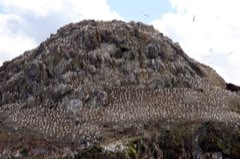 Sept-Îles: gannets on Rouzic, puffins and auksFrance's only gannet colony (about 14,000 pairs on Rouzic) as a wall of grating calls from the boat, puffins and kittiwakes on the sea, and the Atlantic swell against the granite.
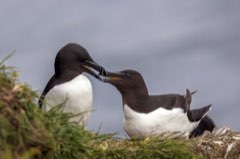 Ertholmene: Denmark's only guillemot and razorbill colonyGuillemots' growling and razorbills' rattle from Græsholm's rocks 100 m across the sound, eider crooning, gull colonies, the Baltic; at night on Christiansø, migrants and the fortress silence.
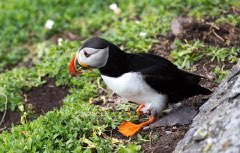 Irish seabird cities: Cliffs of Moher, Great Saltee and the SkelligsThe roar of 20,000 guillemots on the Moher ledges with kittiwakes screaming 'kitti-wake' and fulmars cackling; the Atlantic 200 m below; on Little Skellig the deafening, continuous growl of a gannet city heard over the engine; choughs' ringing calls on the cliff top.
More: all spectacles in Sweden · guillemots · seabird colonies · Sweden in May · June · July