
Great snipe lek at Fokstumyra
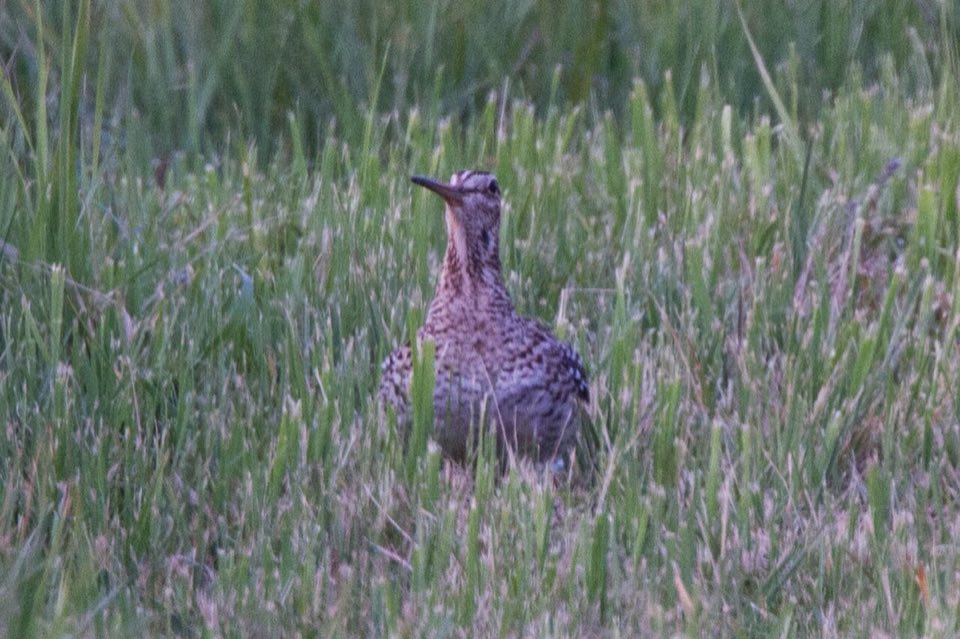
Great snipe (Gallinago media); also whimbrel, ruff (lek), bluethroat, lapland bunting, cranes, hen harrier, short-eared owl. Fokstumyra nature reserve, Dovre (950 m), Norway.
Best time: 25 May – 15 Jun (May to June). Where: Fokstumyra nature reserve (Fokstua, E6), Dovrefjell plateau bogs (Hjerkinn – Kongsvold) (Norway). Time of day: The lek runs 22:00–03:00 in the light Dovre night, peaking around midnight to 01:00 when the E6 is quietest.
- You can go on your own
- Free
- Binoculars essential
- Sound 5/5
Open it in the interactive calendarSunrise and sunset listening times for the day you pick, and the map.
When is the best time?
Peak: 25 May – 15 Jun. 25 May to 15 June, at night and through the midnight twilight
Active from 15 May to 30 Jun (May to June) in a typical year.
Time of day
The lek runs 22:00–03:00 in the light Dovre night, peaking around midnight to 01:00 when the E6 is quietest; whimbrel and bluethroat sing on through.
- Lek: 22:00 → 03:00
What will you hear?
The great snipe's extraordinary accelerating clicks, rattles and whistles from a group of males displaying on the bog, ruff males in silent lek nearby, whimbrel bubbling, bluethroat song, cranes bugling, snipe drumming everywhere, willow grouse cackling.
Binoculars?
Binoculars essential. The lek is on open bog 100–200 m from the trail and tower in the pale Dovre night; binoculars needed, a scope pays.
Where to go
- Fokstumyra nature reserve (Fokstua, E6) — Norway's oldest reserve (1923); marked trail and bird tower; off-trail ban 1 May–1 August protects the leks. Map
- Dovrefjell plateau bogs (Hjerkinn – Kongsvold) — Other great snipe leks on the wet slopes; unmarked — ask BirdLife Norge or the national park centre. Map
How to go on your own, and what it costs
Fokstumyra: park at the signed car park on the E6 at Fokstua (train to Fokstua request stop) and walk the marked trail to the bird tower — free, open at night, off-trail ban 1 May–1 August. Dovrefjell bogs: ask BirdLife Norge or the park centre.
Cost: Free.
Field-recording notes
The off-trail ban is exactly for this: leks are on the open bog and you record from the trail or tower with a long shotgun or parabolic — the display is faint (audible to ~200 m on a still night). The E6 runs along the reserve's edge and the Dovrebanen railway crosses it: night traffic is light but a truck every ten minutes is normal, so use the gaps. Mosquitoes in June are the true noise floor; a head net and stillness. Leks in Norway are protected from disturbance under the reserve rules; no playback.
Sources
- UT.no – Fokstumyra bird tower walk
- Pilegrimsleden – Fokstumyra nature reserve
- xeno-canto – Great snipe
Similar spectacles
 Black grouse leks in the AlpsBubbling 'rookooing' and hissing from males on snow patches at the treeline, ring ouzels, water pipits, and meltwater.
 La Crau steppe: little bustard, sandgrouse & stone-curlewLittle bustards' dry 'prrrt' with a foot-stamp and wing-whirr jump, sandgrouse 'catar-catar' flights to drinking pools, calandra larks in continuous song-flight, stone-curlews at dusk.
 Black grouse leks in the Alps and JuraBubbling 'rookooing' rolling across a snow-patched alpine meadow from several cocks, sneezing 'tchu-shwee' hisses, wing-flutter jumps; ring ouzel and water pipit around them; cowbells not yet arrived.
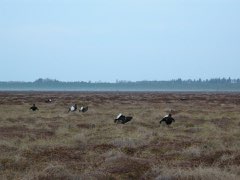 Black grouse leks above the treelineBubbling 'rookooing' and explosive hisses from several cocks on a snow-patched clearing, wing-flutter jumps, ring ouzel and ptarmigan croaks; cowbells arrive later in the season.
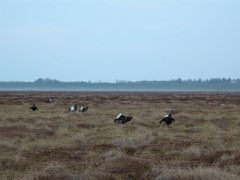 Black grouse leks above the treelineBubbling 'rookooing' and explosive hissing from several cocks at once on a snow-patched clearing, ring ouzel and water pipit around them; capercaillie 'cork-pop' song from the forest edge in the same weeks.
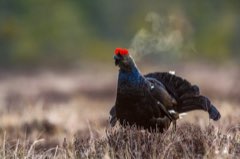 Alpine black grouse leksBubbling leks on snowy slopes at the treeline, with ring ouzels, alpine accentors, and snowmelt streams.
More: all spectacles in Norway · leks · Norway in May · Norway in June