
Alpine black grouse leks
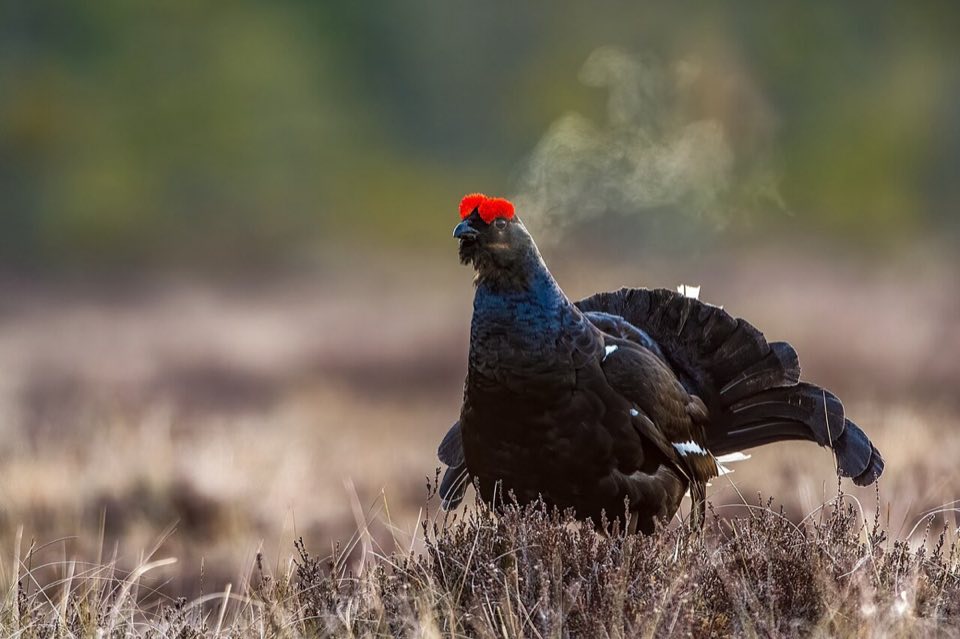
Black grouse (Lyrurus tetrix) — 'fagiano di monte'. Alps, Italy.
Best time: 25 Apr – 31 May (April to May). Where: Parco Nazionale dello Stelvio (Bormio), Parco Naturale Paneveggio–Pale di San Martino, Val Grande National Park, Piedmont (Italy). Time of day: Approach before dark.
- Partly on your own
- Free
- Telescope recommended
- Sound 4/5
Open it in the interactive calendarSunrise and sunset listening times for the day you pick, and the map.
When is the best time?
Peak: 25 Apr – 31 May. Late April to end of May (snow-dependent)
Active from 10 Apr to 10 Jun (April to June) in a typical year.
Time of day
Approach before dark; display from about 45 min before sunrise to 2 h after, then the cocks disperse; a shorter evening lek in the hour before sunset.
- Dawn lek: 45 min before sunrise → 2 h after sunrise
- Evening lek: 1 h before sunset → sunset
What will you hear?
Bubbling leks on snowy slopes at the treeline, with ring ouzels, alpine accentors, and snowmelt streams.
Binoculars?
Telescope recommended. Sit 150 m off in cover at first light; a scope makes the display, binoculars are the minimum.
Where to go
- Parco Nazionale dello Stelvio (Bormio) — Park rangers can advise on non-disturbing viewpoints. Map
- Parco Naturale Paneveggio–Pale di San Martino — Guided outings sometimes offered by the park. Map
- Val Grande National Park, Piedmont — Remote and roadless. Map
How to go on your own, and what it costs
Public trails at the treeline are free, but the leks are not signposted and disturbance is a real problem: ask the Stelvio park visitor centre in Bormio or the Paneveggio park office for non-disturbing viewpoints, walk up in the dark, sit 150 m off in cover and leave after the birds. Val Grande: remote, free, no facilities.
Cost: Free; park-guided outings (Paneveggio) are paid when offered (check current prices).
Free or no-guide alternative: Free from the public trails above Bormio (Stelvio) once a ranger has pointed you to a viewpoint that does not disturb the birds; arrive in the dark and stay put.
Field-recording notes
Winter roost and lek disturbance is a serious issue for Alpine grouse. Approach before dark, stay put, and leave only after the birds do. Capercaillie leks are not a target anywhere in the Alps. Snow at dawn means very low noise floor — self-noise matters.
Sources
Similar spectacles
 Capercaillie and black grouse leks in the eastern forestsCapercaillie's clicking, cork-pop and grinding song from pine bog edges, wing-beats of cocks flying in, black grouse bubbling on the open bogs; cranes, whooper swans and Tengmalm's owl in the same nights.
 Black grouse leksBubbling 'rookooing' from displaying males, hissing 'tchu-wee' sneezes and flutter jumps; curlew and snipe often in the same soundscape.
 Capercaillie and black grouse — the ones you do not visitThe capercaillie's accelerating clicks, 'cork-pop' and grinding — a very quiet song (audible to ~200 m) that is almost never recorded in Germany without a permit. Black grouse bubbling in the Alps.
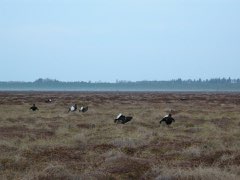 Black grouse leks in the AlpsBubbling 'rookooing' and hissing from males on snow patches at the treeline, ring ouzels, water pipits, and meltwater.
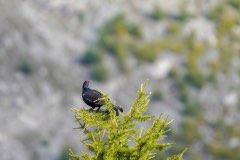 Black grouse leks in the Alps and JuraBubbling 'rookooing' rolling across a snow-patched alpine meadow from several cocks, sneezing 'tchu-shwee' hisses, wing-flutter jumps; ring ouzel and water pipit around them; cowbells not yet arrived.
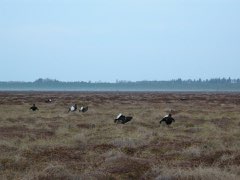 Black grouse leks above the treelineBubbling 'rookooing' and explosive hisses from several cocks on a snow-patched clearing, wing-flutter jumps, ring ouzel and ptarmigan croaks; cowbells arrive later in the season.
More: all spectacles in Italy · black grouse leks · leks · Italy in April · Italy in May