
Black grouse leks above the treeline
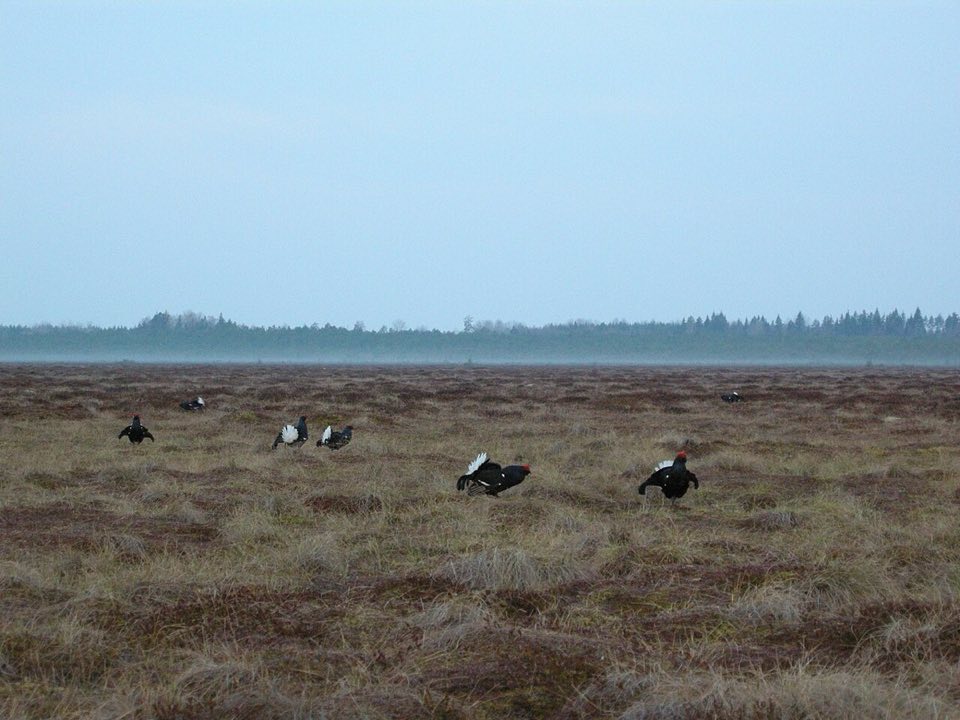
Black grouse (Lyrurus tetrix); rock ptarmigan, ring ouzel, water pipit, alpine accentor. Hohe Tauern, Nockberge (Carinthia), Kalkalpen, Tyrol, Austria.
Best time: 15 Apr – 15 May (April to May). Where: Nockberge Biosphere Park (Innerkrems / Turracher Höhe), Hohe Tauern – Rauris and Mölltal side valleys, Nationalpark Kalkalpen – alpine pastures (Hengstpass area) (Austria). Time of day: In place in full dark: display from about 04:00 (an hour before sunrise in April) until 08:00, peaking at first light.
- Partly on your own
- Free
- Telescope recommended
- Sound 4/5
Open it in the interactive calendarSunrise and sunset listening times for the day you pick, and the map.
When is the best time?
Peak: 15 Apr – 15 May. Mid April to mid May
Active from 1 Apr to 31 May (April to May) in a typical year.
Time of day
In place in full dark: display from about 04:00 (an hour before sunrise in April) until 08:00, peaking at first light; a shorter evening lek in the hour before sunset.
- Dawn lek: 1 h before sunrise → 150 min after sunrise
- Evening lek: 1 h before sunset → sunset
What will you hear?
Bubbling 'rookooing' and explosive hisses from several cocks on a snow-patched clearing, wing-flutter jumps, ring ouzel and ptarmigan croaks; cowbells arrive later in the season.
Binoculars?
Telescope recommended. Sit 150 m+ off in cover at first light; a scope makes the display, binoculars are the minimum.
Where to go
- Nockberge Biosphere Park (Innerkrems / Turracher Höhe) — Dwarf-pine and pasture plateaus with traditional leks; biosphere rangers run spring 'Birkhahnbalz' tours. Map
- Hohe Tauern – Rauris and Mölltal side valleys — Leks on avalanche meadows near the treeline; ranger-led early tours in April–May. Map
- Nationalpark Kalkalpen – alpine pastures (Hengstpass area) — Smaller population; park rangers know the sites. Map
How to go on your own, and what it costs
Leks are known to rangers and hunters, not the public: ask, join a guided dawn (Nockberge biosphere rangers, Hohe Tauern rangers) and don't search. Once you know a lek, walk up from the Innerkrems/Turracher Höhe car parks or the Rauris side valleys in full dark, 150 m+ off in cover, and leave after the cocks fly.
Cost: Free from public trails; ranger 'Birkhahnbalz' tours (check current prices).
Free or no-guide alternative: Free: the pasture plateaus around Turracher Höhe and Innerkrems from the public trails — sit at the trail edge in the dark and listen; never walk onto the lek.
Who runs access
- Biosphärenpark Nockberge – ranger Birkhahnbalz tours (park authority) — Spring dawn tours to a lek with the biosphere rangers.
- Nationalpark Hohe Tauern – ranger tours (park authority) — Early-morning lek tours in April–May in some valleys.
Field-recording notes
Leks are known to rangers and hunters (black grouse is still a hunted species in Austria under strict quotas) and not to the public — ask, join a guided dawn, and don't search. Arrive in full dark, 150 m+ downwind, in a natural hide; leave after the cocks fly. Firn snow in April carries sound but also every footstep. Ski-touring traffic on spring mornings is the disturbance the Vogelwarte and Austrian conservationists worry most about — avoid leks near lifts. No playback, no drones (national park and biosphere rules).
Sources
Similar spectacles
 Capercaillie and black grouse leks in the eastern forestsCapercaillie's clicking, cork-pop and grinding song from pine bog edges, wing-beats of cocks flying in, black grouse bubbling on the open bogs; cranes, whooper swans and Tengmalm's owl in the same nights.
 Black grouse leksBubbling 'rookooing' from displaying males, hissing 'tchu-wee' sneezes and flutter jumps; curlew and snipe often in the same soundscape.
 Capercaillie and black grouse — the ones you do not visitThe capercaillie's accelerating clicks, 'cork-pop' and grinding — a very quiet song (audible to ~200 m) that is almost never recorded in Germany without a permit. Black grouse bubbling in the Alps.
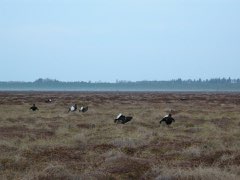 Black grouse leks in the AlpsBubbling 'rookooing' and hissing from males on snow patches at the treeline, ring ouzels, water pipits, and meltwater.
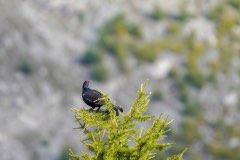 Black grouse leks in the Alps and JuraBubbling 'rookooing' rolling across a snow-patched alpine meadow from several cocks, sneezing 'tchu-shwee' hisses, wing-flutter jumps; ring ouzel and water pipit around them; cowbells not yet arrived.
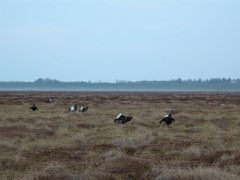 Black grouse leks above the treelineBubbling 'rookooing' and explosive hissing from several cocks at once on a snow-patched clearing, ring ouzel and water pipit around them; capercaillie 'cork-pop' song from the forest edge in the same weeks.
More: all spectacles in Austria · black grouse leks · leks · Austria in April · Austria in May