
Hadejia-Nguru wetlands: Sahelian floodplain waterfowl
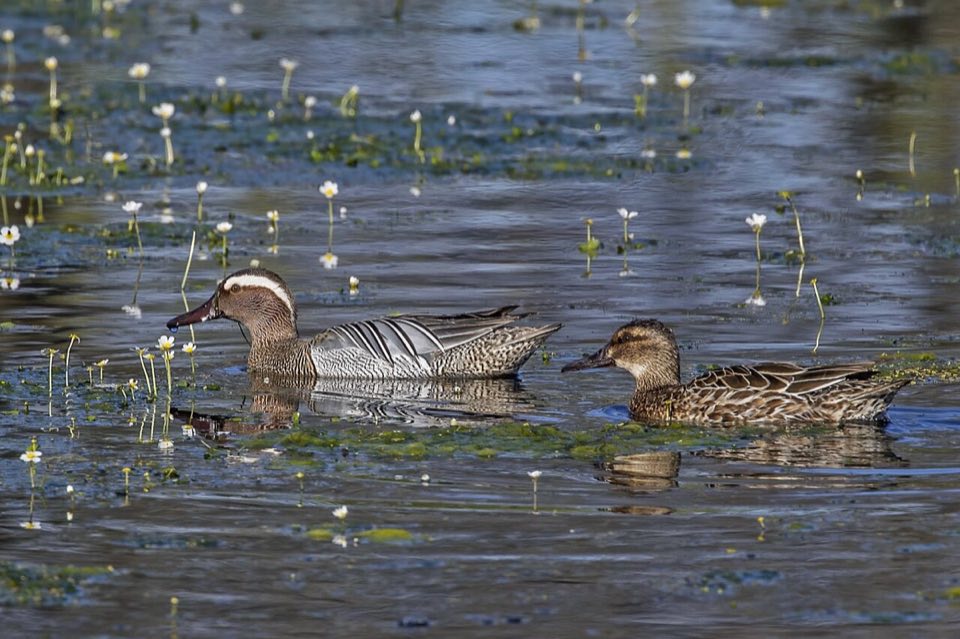
Garganey, northern pintail, ruff (tens of thousands), white-faced whistling duck, spur-winged goose, glossy ibis, black-tailed godwit, collared pratincole; Sahel birds and wintering warblers in the acacias. Hadejia-Nguru wetlands, Yobe & Jigawa States, Nigeria.
Best time: 15 Dec – 15 Feb (December to February). Where: Nguru Lake, Dagona Waterfowl Sanctuary (Chad Basin National Park, Bade-Nguru sector) (Nigeria). Time of day: Flocks feed and move from the first light until about 09:30 and again from 16:30.
- Partly on your own
- Low cost
- Binoculars essential
- Sound 4/5
Open it in the interactive calendarSunrise and sunset listening times for the day you pick, and the map.
When is the best time?
Peak: 15 Dec – 15 Feb. Mid December to mid February: the January waterbird census has counted 200,000–325,000 birds here in good flood years
Active from 1 Nov to 15 Mar (November to March) in a typical year.
Time of day
Flocks feed and move from the first light until about 09:30 and again from 16:30; ducks and whistling ducks fly to and from the night pools from dusk, with the loudest passage in the hour after dark
- Morning flocks: first light → 09:30
- Afternoon feeding: 16:30 → sunset
- Evening flight: sunset → 1 h after last light
What will you hear?
Whistling-duck choruses overhead at dusk, the massed wing-noise of garganey and pintail flushing off a pool, ruff flocks, ibis and herons in the flooded acacia and the Sahel wind in typha and doum palms.
Binoculars?
Binoculars essential. Duck and ruff flocks on open floodplain pools 100–500 m off; binoculars needed, a scope pays. Dusk flights are overhead.
Where to go
- Nguru Lake — The largest permanent water; reached from Nguru town. Map
- Dagona Waterfowl Sanctuary (Chad Basin National Park, Bade-Nguru sector) — The protected core with ranger post and pools; entry through the park service. Map
How to go on your own, and what it costs
Bus to Nguru (from Kano); the lake shore and the floodplain villages are open land and free, with a local fisherman or the Hadejia-Nguru Wetlands Conservation Project office as the best introduction. The Dagona sanctuary needs the park entry fee and a ranger.
Cost: Free on the open floodplain; Dagona sanctuary entry through Chad Basin National Park, check current prices.
Free or no-guide alternative: Nguru Lake's shore and the floodplain tracks are open land: the dusk flights and the dawn flocks cost nothing.
Field-recording notes
Flood extent decides everything: upstream dams and dry years leave the pools small and the birds few, and typha has choked channels. The sanctuary is a national park sector with rangers and an entry fee; the rest is farmland and fishing villages where a local guide is a courtesy, not a rule. Irrigation pumps and the town of Nguru are the noise; the pools north of the lake are quiet. Harmattan mornings are cold, dusty and very still. This is north-east Nigeria (Yobe State); check current travel advice carefully — access has been restricted for years at a time.
Sources
- Hadejia-Nguru wetlands – Ramsar Information Sheet (RIS)
- Hadejia-Nguru wetlands – Key Biodiversity Areas
- Waterbird population estimates in Hadejia-Nguru, five-year monitoring (Wetlands, 2022)
Similar spectacles
 Wadden Sea autumn: geese, waders and whooper swans in the marshBarnacle goose yapping in flocks of tens of thousands over the Ballum marsh, brent geese growling on the flats, golden plover flocks whistling, whooper swan families bugling on the polders at night, curlew; the tide.
 Pink-footed goose dawn flightsTens of thousands of geese lifting off the mudflats at first light in a wall of 'wink-wink' calls, wave after wave overhead.
 Whooper swans & barnacle geeseBugling whoopers and yapping barnacle flocks like a huge crowd; the whole Svalbard barnacle population is on one estuary.
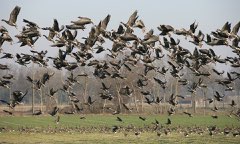 Arctic geese on the Lower RhineWhite-fronted geese's high yelping in skeins of thousands, bean geese's deeper 'kayak', the roar of a roost lifting off the Rhine at first light, whooper swans on the Bislicher Altrhein; barges and the A57 underneath.
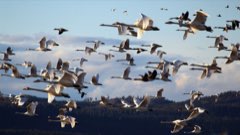 Lower Oder Valley: whooper swans, geese and the flooded poldersWhooper swan bugling in chorus over the polder ice-edge, geese lifting at dawn by the thousand, smew and goldeneye wing-whistle, eagle yelps; in October, cranes; in May, corncrakes at night.
 Wintering cranes at ArjuzanxWaves of cranes dropping into the flooded roost after dark, a continuous rolling chorus that carries for kilometres over the pine plantations.
More: all spectacles in Nigeria · winter geese, swans and ducks · Nigeria in January · Nigeria in February · Nigeria in December