
White-headed ducks and marbled teal wintering on Lac Sidi Boughaba
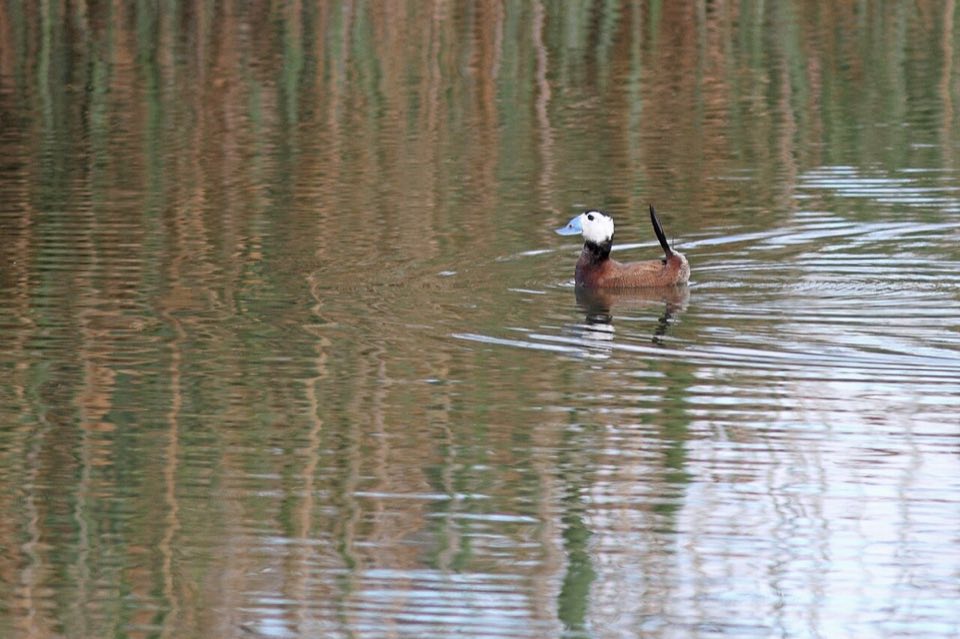
White-headed duck (well over 100 in winter), marbled teal, red-knobbed (crested) coot, ferruginous duck, red-crested pochard, purple swamphen; marsh owl at night. Mehdia / Kenitra, Atlantic coast north of Rabat, Morocco.
Best time: 1 Dec – 28 Feb (December to February). Where: Lac Sidi Boughaba — north-west car park, Eastern shore track, Mehdia beach and oued mouth (Morocco). Time of day: First two hours after sunrise before the picnickers arrive (busy at weekends).
- You can go on your own
- Free
- Binoculars essential
- Sound 3/5
Open it in the interactive calendarSunrise and sunset listening times for the day you pick, and the map.
When is the best time?
Peak: 1 Dec – 28 Feb. December to February — the biggest white-headed duck and marbled teal counts; the lake shrinks or dries in drought years, so check it holds water
Active from 1 Oct to 31 Mar (October to March) in a typical year.
Time of day
First two hours after sunrise before the picnickers arrive (busy at weekends); last hour of light for the coot and swamphen chorus, then marsh owls hunting over the north end after dark
- Quiet morning: sunrise → 2 h after sunrise
- Evening chorus and owls: 1 h before sunset → 1 h after last light
What will you hear?
Coots, moorhens and purple swamphens whooping and grunting from the reeds at dusk, the growl of little grebes, marbled teal's thin whistles, and the only reliable Moroccan chorus of white-headed duck display rattles in late winter. Marsh owl wing-beats and barks over the northern reeds after dark.
Binoculars?
Binoculars essential. Ducks sit 100–400 m out among the reed islands; binoculars minimum, a scope separates white-headed duck from ruddy-type hybrids and finds the marbled teal in the fringe.
Where to go
- Lac Sidi Boughaba — north-west car park — Turn sharp left where the P4266 from Kenitra meets the lake; paved road and wide flat path along the west shore. Reserve run by ANEF; small education centre. Map
- Eastern shore track — Second parking on the east side; the reed islands and the open south basin are closest from here. Map
- Mehdia beach and oued mouth — The Sebou estuary 2 km west: gulls, terns and waders to add before or after the lake. Kenitra taxis. Map
How to go on your own, and what it costs
Train to Kenitra, then a petit taxi (about 10 km) to Mehdia Plage / the lake, or drive the P4266 south-west from Kenitra. Park at either end and walk the shore paths; no entry fee, no hide. Open daytime; the road is public at night.
Cost: Free (2026); taxi from Kenitra about 30–50 Dh each way (check current prices).
Field-recording notes
A small lake with a lot of people: weekends and holidays are loud with families, cars and music — go on a weekday dawn. The Rabat–Tangier motorway and the N1 are 3–5 km east and audible on still nights; aircraft from Kenitra air base. Night access is tolerated on the public road but the reserve paths close at dusk in principle — stay on the road side and tell the guards. The lake dried almost completely in the 2022–24 drought and refilled in 2025: numbers vary enormously year to year. Protected site (Ramsar 1980): no boats, no wading, no playback for the owls.
Sources
- Birdingplaces – Lac Sidi Boughaba (access, parking, 100+ white-headed ducks in winter, marsh owl)
- Hespress (March 2025) – Sidi Boughaba Biological Reserve revived by recent rainfall (marbled teal, red-knobbed coot, 150–200 ha)
Similar spectacles
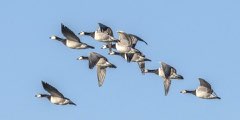 Wadden Sea autumn: geese, waders and whooper swans in the marshBarnacle goose yapping in flocks of tens of thousands over the Ballum marsh, brent geese growling on the flats, golden plover flocks whistling, whooper swan families bugling on the polders at night, curlew; the tide.
 Pink-footed goose dawn flightsTens of thousands of geese lifting off the mudflats at first light in a wall of 'wink-wink' calls, wave after wave overhead.
 Whooper swans & barnacle geeseBugling whoopers and yapping barnacle flocks like a huge crowd; the whole Svalbard barnacle population is on one estuary.
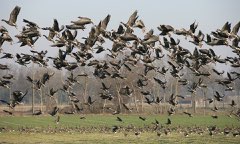 Arctic geese on the Lower RhineWhite-fronted geese's high yelping in skeins of thousands, bean geese's deeper 'kayak', the roar of a roost lifting off the Rhine at first light, whooper swans on the Bislicher Altrhein; barges and the A57 underneath.
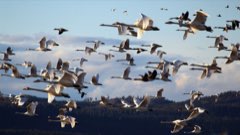 Lower Oder Valley: whooper swans, geese and the flooded poldersWhooper swan bugling in chorus over the polder ice-edge, geese lifting at dawn by the thousand, smew and goldeneye wing-whistle, eagle yelps; in October, cranes; in May, corncrakes at night.
 Wintering cranes at ArjuzanxWaves of cranes dropping into the flooded roost after dark, a continuous rolling chorus that carries for kilometres over the pine plantations.
More: all spectacles in Morocco · winter geese, swans and ducks · Morocco in January · Morocco in February · Morocco in December