
Autumn seabird passage off Cap Rhir, north of Agadir
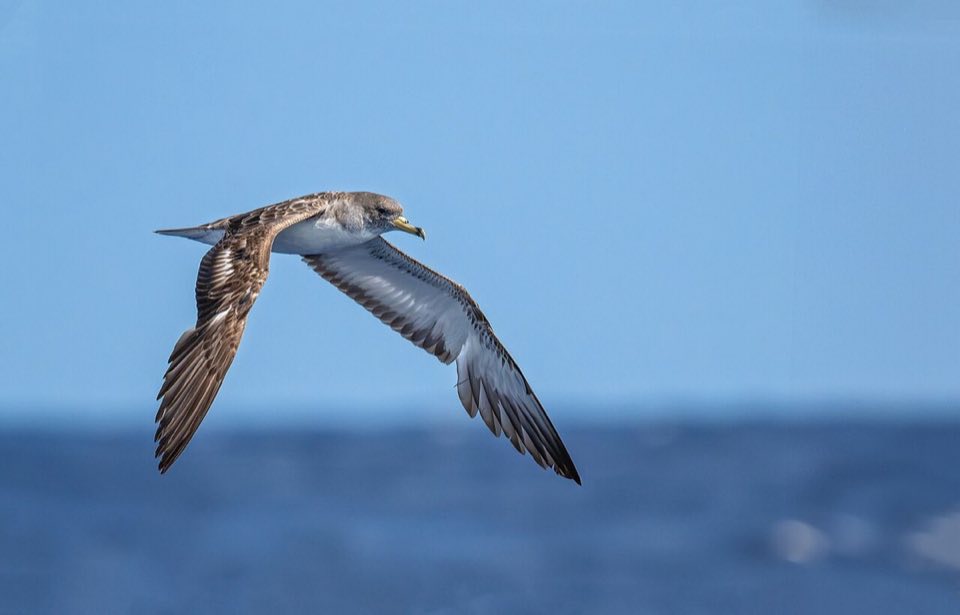
Scopoli's and Cory's shearwaters (hundreds a day), Balearic, Manx, sooty and great shearwaters, gannet, great, pomarine and Arctic skuas, Sabine's gull, razorbill, Audouin's and lesser crested terns; northern bald ibis flying past the cape. Cap Rhir (Cap Ghir), Atlantic coast 40 km north-west of Agadir, Morocco.
Best time: 15 Sep – 31 Oct and 1 Mar – 30 Apr (March to April, September to October). Where: Cap Rhir lighthouse, Taghazout cliffs, Agadir marina — pelagic trips (Morocco). Time of day: First three hours after sunrise, and again in the last two before sunset when shearwaters raft inshore.
- You can go on your own
- Free
- Telescope recommended
- Sound 1/5
Open it in the interactive calendarSunrise and sunset listening times for the day you pick, and the map.
When is the best time?
- Peak 1: 15 Sep – 31 Oct — Autumn passage
- Peak 2: 1 Mar – 30 Apr — Spring return
Active from 15 Aug to 30 Nov (August to November) in a typical year.
Time of day
First three hours after sunrise, and again in the last two before sunset when shearwaters raft inshore; westerly winds bring the birds within scope range
- Morning seawatch: sunrise → 3 h after sunrise
- Evening rafts: 2 h before sunset → sunset
What will you hear?
A visual event: hundreds of Scopoli's shearwaters shearing past the lighthouse point, skuas chasing terns, and now and then the park's bald ibis flapping by at eye level. Surf on the rocks, wind, and fishermen on the ledges below.
Binoculars?
Telescope recommended. A scope is the whole point — most shearwaters pass 500 m to 2 km out; the lighthouse point and the field edge south of it are the perches.
Where to go
- Cap Rhir lighthouse — Rocky promontory with the lighthouse; park in the fields a little south, walk round and pick a spot in the lee. Unpaved track from the coast road. Map
- Taghazout cliffs — Surf village 20 km south: cliff viewpoints for shearwaters on evenings when they raft; easy from Agadir by bus. Map
- Agadir marina — pelagic trips — Boat trips 15 km offshore in October have logged six shearwater species in one morning; occasional, arranged through local birders. Map
How to go on your own, and what it costs
Drive or taxi north from Agadir on the N1 coast road past Taghazout and Imsouane junction to the Cap Rhir track (40 km, about 1 h); local buses go to Taghazout and Tamri. Park south of the lighthouse and walk. Free.
Cost: Free (2026); grand taxi from Agadir to Tamri/Cap Rhir about 20–30 Dh per seat (check current prices).
Field-recording notes
Not a sound site: wind and surf are the recording. Worth a hydrophone off the rocks on a flat day for dolphins (two species came to the October pelagic). The cape is open and windy — no shelter, no shade; a car as hide. Free access at any hour; the lighthouse itself is closed. Counts are thin for Morocco — enter yours in Trektellen/eBird.
Sources
- Birdingplaces – Cap Ghir (seawatching, species, parking, westerly winds)
- GREPOM Go-South – Observations offshore from Agadir, 30 October 2017 (six shearwater species, c. 500 Scopoli's/Cory's)
Similar spectacles
 Cory's shearwater colonies of the CanariesThe wailing, sobbing 'pardela' chorus from thousands of birds over sea cliffs — the sound behind the Canarian mermaid legends — with the Atlantic swell and Bulwer's petrels' soft barking.
 Shearwater colonies: Îles d'Hyères and LavezziWailing and cackling shearwaters arriving over the cliffs at night to their burrows — Port-Cros holds about 90% of France's Yelkouan population — with the Mediterranean swell below.
 Balearic shearwater & storm petrel islandsHoarse, cackling Balearic shearwaters arriving to cliff burrows after dark, storm petrels purring in cave crevices, Audouin's gull colonies and Eleonora's falcons screaming over the sea in late summer.
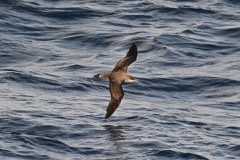 Raso and Branco — Cape Verde shearwater islets and the Raso larkA Macaronesian petrel night in the tropics: thousands of Cape Verde shearwaters wailing and cackling as they come in off the sea, the rush of wings down the canyons close overhead, geckos chirping into the small hours, tropicbird screams by day. No people, no engines, no lights.
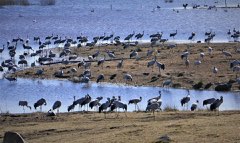 Spring crane staging: Hornborgasjön and PulkenThousands of cranes bugling in chorus — trumpeting that carries for kilometres, rising to a roar when a flock lifts; unison calls of pairs, wing noise of landing flocks, whooper swans and lapwings in the background.
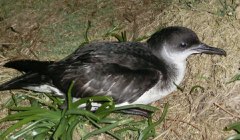 Manx shearwaters returning at nightHundreds of thousands of birds crashing in, with cackling, choking, hoarse calls from the air and burrows all around you.
More: all spectacles in Morocco · shearwaters · bird migration hotspots · Morocco in March · Morocco in April · Morocco in September · Morocco in October