
Raso and Branco — Cape Verde shearwater islets and the Raso lark
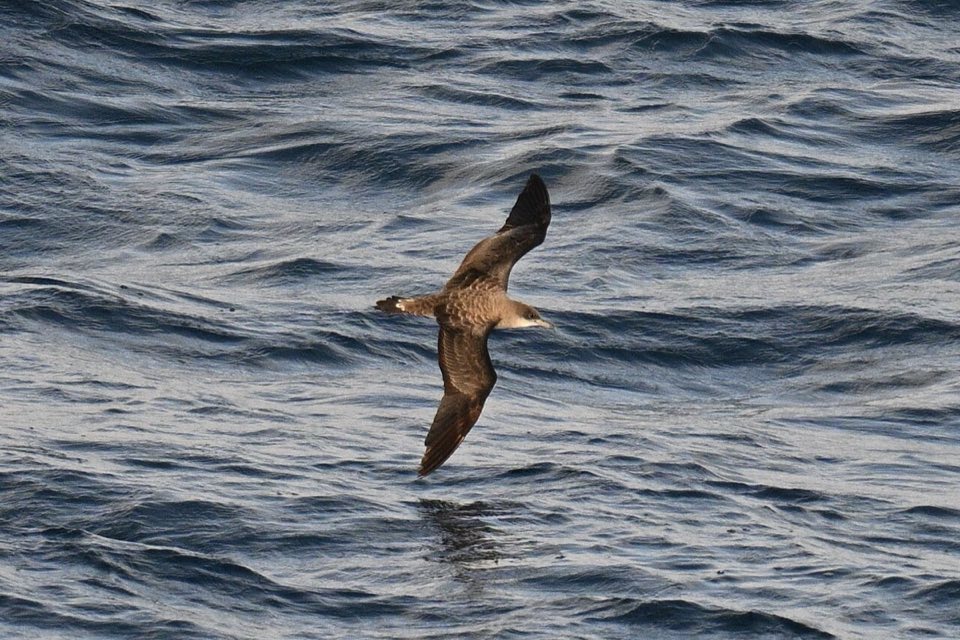
Cape Verde shearwater (Calonectris edwardsii, 2,500–3,750 pairs on Raso), red-billed tropicbird, brown booby, Cape Verde storm-petrel, Boyd's shearwater, Bulwer's petrel; Raso lark (critically endangered, Raso only). Santa Luzia–Branco–Raso integral nature reserve, between São Vicente and São Nicolau, Cabo Verde.
Best time: 1 Jun – 30 Sep (June to September). Where: Ilhéu Raso, Ilhéu Branco, Tarrafal, São Nicolau (Cabo Verde). Time of day: The shearwater return starts 1 hour after sunset and the air over the islet is full of calling birds until the small hours.
- Guide, ranger or boat needed
- Paid trip only
- Binoculars helpful
- Sound 4/5
Open it in the interactive calendarSunrise and sunset listening times for the day you pick, and the map.
When is the best time?
Peak: 1 Jun – 30 Sep. June to September — shearwaters incubating and feeding chicks, nightly return of thousands of birds; tropicbirds and boobies on the cliffs all year
Active from 1 Mar to 31 Oct (March to October) in a typical year.
Time of day
The shearwater return starts 1 hour after sunset and the air over the islet is full of calling birds until the small hours; departures before dawn
- Shearwater return: 1 h after sunset → 01:00
- Pre-dawn departure: 90 min before first light → first light
What will you hear?
A Macaronesian petrel night in the tropics: thousands of Cape Verde shearwaters wailing and cackling as they come in off the sea, the rush of wings down the canyons close overhead, geckos chirping into the small hours, tropicbird screams by day. No people, no engines, no lights.
Binoculars?
Binoculars helpful. From an anchored boat the rafts and cliffs are 100–300 m off; binoculars enough by day, nothing helps at night — it is an ear event.
Where to go
- Ilhéu Raso — 7 km² islet, highest point 164 m; the main shearwater and tropicbird colonies and all the Raso larks. Landing forbidden without a government permit; Biosfera wardens camp here in season. Map
- Ilhéu Branco — Sheer, uninhabited islet west of Raso with shearwater, storm-petrel and tropicbird colonies; no landing. Coordinates approximate. Map
- Tarrafal, São Nicolau — Nearest harbour (15 km): fishing boats are hired here for the crossing. Map
- Mindelo, São Vicente — Biosfera's office; longer boat trips to Santa Luzia and Raso leave from here when the sea allows. Map
How to go on your own, and what it costs
Fly or ferry to São Nicolau, then hire a fishing boat in Tarrafal (agree a price for a dusk-to-midnight anchorage off Raso's south coast, or a day circuit of Raso and Branco). Landing is prohibited without a permit — contact Biosfera (Mindelo) well ahead if you want to land as a volunteer or for research. Crossings are cancelled in swell.
Cost: Boat hire from Tarrafal typically a few hundred euro per boat per day negotiated locally (tens of thousands of CVE; check current prices); Biosfera volunteer placements separate.
Free or no-guide alternative: No legal landing without a permit. Cheapest listen: a Tarrafal fishing boat at dusk anchored off the islet, engine off — the colony's night chorus carries clearly over the water. Shearwaters also raft and call off São Nicolau's own north-west cliffs at dusk, visible free from the shore.
Who runs access
- Biosfera (Mindelo) — reserve wardens, volunteer programme (NGO) — The only organisation with a permanent presence on Raso; GPS tracking and ringing of the seabirds.
Field-recording notes
Landing needs a permit from the environment authorities, usually arranged through Biosfera for research or as a volunteer; without one the boat anchors off and you record from the water. Petrel nights are best in the dark of the moon. The islets are rat-free — biosecurity (clean bags, no food waste) is a condition of any landing. Wind: the NE trade is constant; the lee (south) side of Raso is where boats anchor and where the shearwater canyons are. Traditional illegal taking of shearwater chicks still happens in late summer and the wardens are there to stop it — a camp of recordists is welcome only through them. No playback at colonies.
Sources
- Macaronesian.org – Raso (reserve 1990, landing by permit only, boats from Tarrafal)
- Wikipedia – Raso Island (2,500–3,750 pairs Cape Verde shearwater, tropicbirds, Raso lark)
- The Ecologist – Raso Island, a jewel in the crown of Africa's wildlife (night on the islet)
- Bird Conservation International – Distribution, abundance and on-land threats to Cabo Verde seabirds
Similar spectacles
 Shearwater colonies at night, Lastovo archipelagoScopoli's shearwaters wailing and cackling overhead and from burrows — the 'crying baby' chorus of Mediterranean islets; Yelkouan's higher nasal calls; waves on rock, cicadas fading at dusk.
 Berlengas: Cory's shearwaters calling over the island at nightHundreds of Cory's shearwaters wailing and sobbing over the island in the dark — the Atlantic's strangest chorus — with the yellow-legged gull colony grumbling, shags croaking on the ledges and the swell in the sea caves. On the mainland, the same birds raft silently off Cabo Carvoeiro at dusk.
 Balearic shearwater & storm petrel islandsHoarse, cackling Balearic shearwaters arriving to cliff burrows after dark, storm petrels purring in cave crevices, Audouin's gull colonies and Eleonora's falcons screaming over the sea in late summer.
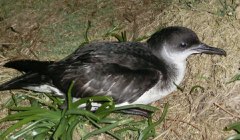 Manx shearwaters returning at nightHundreds of thousands of birds crashing in, with cackling, choking, hoarse calls from the air and burrows all around you.
 Scopoli's & Yelkouan shearwater coloniesScopoli's 'crying baby' wails from thousands of birds arriving over cliffs — one of the Mediterranean's strangest sounds.
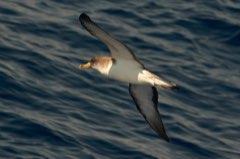 Cory's shearwater colonies of the CanariesThe wailing, sobbing 'pardela' chorus from thousands of birds over sea cliffs — the sound behind the Canarian mermaid legends — with the Atlantic swell and Bulwer's petrels' soft barking.
More: all spectacles in Cabo Verde · shearwaters · seabird colonies · June · July · August · September