
Lesser kestrel colonies in the Sassi of Matera
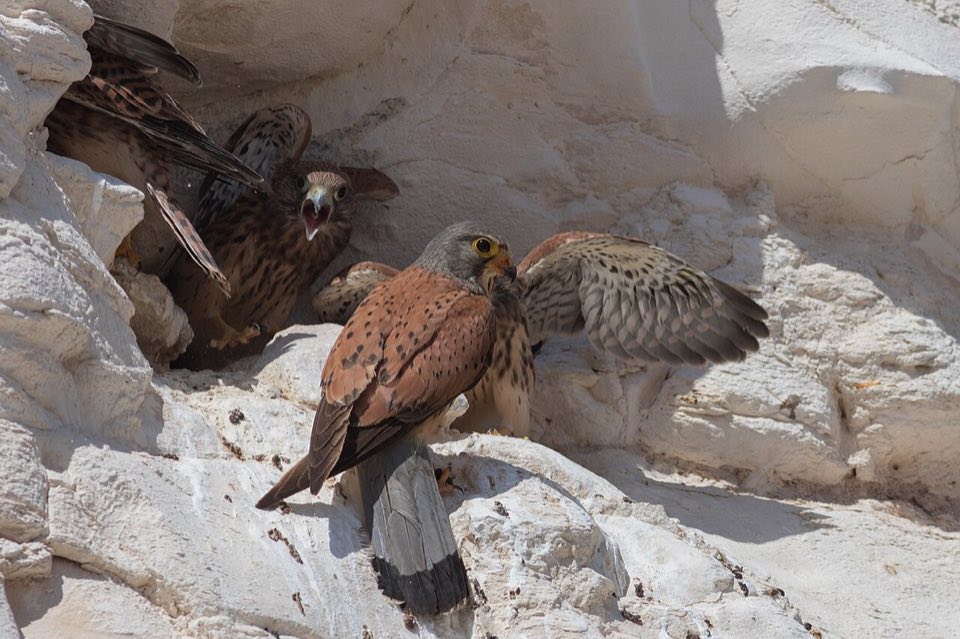
Lesser kestrel (Falco naumanni). Matera, Basilicata; Alta Murgia, Puglia, Italy.
Best time: 1 May – 30 Jun (May to June). Where: Sassi di Matera, Gravina in Puglia old town (Italy). Time of day: Pre-roost flights over the Sassi in the last 90 min before sunset, densest in the final 30 min.
- You can go on your own
- Free
- Binoculars helpful
- Sound 4/5
Open it in the interactive calendarSunrise and sunset listening times for the day you pick, and the map.
When is the best time?
Peak: 1 May – 30 Jun. May–June (chicks calling; evening screaming flights)
Active from 10 Mar to 15 Aug (March to August) in a typical year.
Time of day
Pre-roost flights over the Sassi in the last 90 min before sunset, densest in the final 30 min; a quieter bout of colony activity in the first 2 h after sunrise.
- Evening pre-roost: 90 min before sunset → last light
- Morning colony: sunrise → 2 h after sunrise
What will you hear?
Hundreds of chattering 'che-che-che' kestrels wheeling over the roofs of a UNESCO old town at dusk, with swifts, jackdaws and church bells.
Binoculars?
Binoculars helpful. Hundreds wheel over the roofs at dusk; binoculars from the Murgia rim across the gorge.
Where to go
- Sassi di Matera — Europe's largest urban colony (over a thousand pairs at its peak, now declining as roofs are restored). Best from the Belvedere Luigi Guerricchio or the Murgia rim opposite. Map
- Gravina in Puglia old town — Similar cliff-and-roof colony, fewer tourists. Map
How to go on your own, and what it costs
Matera: stand at the Belvedere Luigi Guerricchio (Piazzetta Pascoli) at dusk, or drive to the Murgia Timone car park in the Parco della Murgia Materana and walk to the belvedere opposite the Sassi — all free. Gravina in Puglia: the old town streets and the Ponte Acquedotto viewpoint.
Cost: Free.
Field-recording notes
Tourism noise in Matera is heavy in the evening; the Murgia Timone side across the gorge gives the colony at distance with a quiet background. Nests are under roof tiles — no rooftop access. Protected species (Birds Directive Annex I).
Sources
Similar spectacles
 Lesser kestrel colonies of TrujilloA colony of small falcons chattering — the 'chay-chay-chay' and trilling of dozens of lesser kestrels over the bullring roof, swifts screaming through the Plaza Mayor, storks clattering on the church towers and the market noise of an Extremaduran town beneath it.
 White-tailed eagles: Smøla, Lofoten and the TrollfjordThe eagle's yelping 'klee-klee-klee' duet from a nest crag, wing-rush of a 2.4 m bird taking a fish 10 m from the boat, gull and tern colonies, otters whistling in the skerries.
 Vulture cliffs of the Jonte, Verdon and OssauWing-rush of griffons passing a few metres over the rim, hissing and grunting from the colony ledges, chough flocks and the river below; more a sight than a sound.
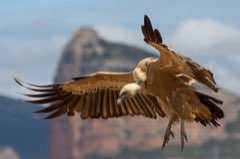 Griffon cliffs: Hoces del Duratón, Hoces del Riaza and MonfragüeA griffon colony settling at dusk is a surprisingly loud thing: hisses, grunts and cackles from hundreds of birds squabbling over ledges, the rush of wings passing at head height, choughs and alpine swifts along the wall and, after dark in winter, eagle owls hooting across the gorge.
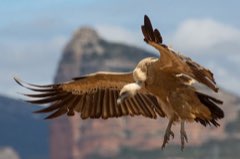 Griffon vultures on the sea cliffs of CresHissing and grunting at the ledges, the wind-rip of 2.7 m wings passing low over a boat, chick begging; shags and yellow-legged gulls beneath, cicadas and scops owl in the maquis behind.
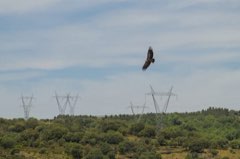 Douro Internacional: griffon and Egyptian vultures on the canyon wallsMostly visual, but the canyon is a natural reverb chamber: griffon wing-rush as they pass the viewpoint at eye level, hissing and grunting at the nests carrying across the gorge, alpine swifts screaming along the walls, blue rock thrush and the river far below.
More: all spectacles in Italy · birds of prey · Italy in May · Italy in June