
Tanbi wetlands and the Bund Road lagoons — Banjul's wader, gull and egret roosts
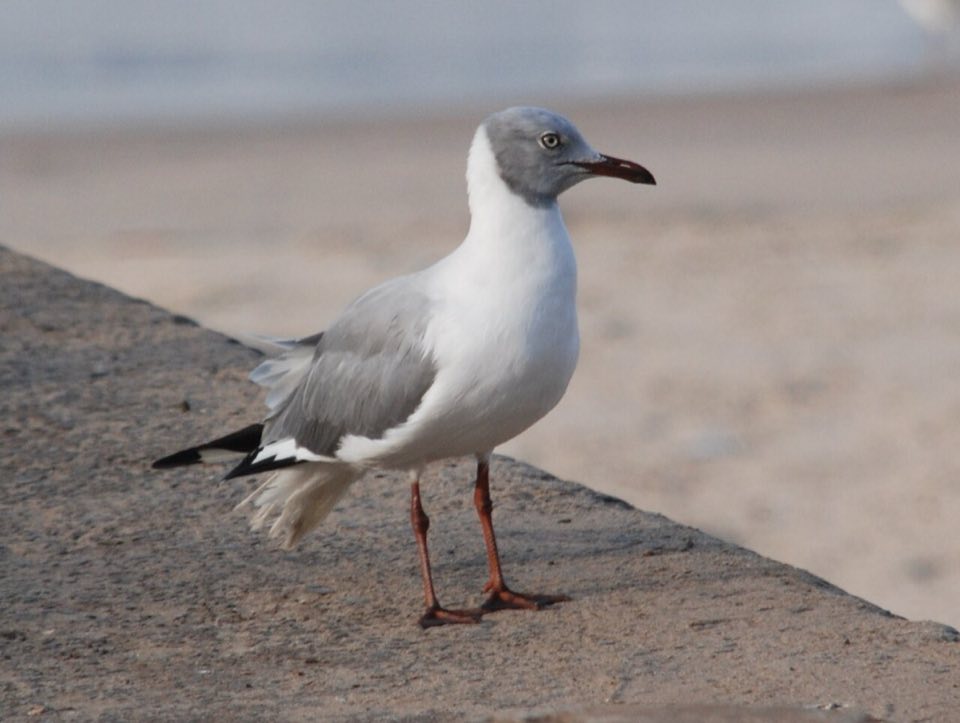
Palearctic waders (turnstone, little stint, curlew sandpiper, godwits, avocet), royal and Caspian terns, grey-headed and slender-billed gulls (hundreds), Audouin's gull, pelicans, African spoonbill, herons; cattle egret roost of several thousand at Cape Creek; West African manatee. Tanbi Wetland Complex (Ramsar), between Banjul and Serekunda, The Gambia.
Best time: 1 Dec – 28 Feb (December to February). Where: Bund Road (Kankujereh Road) lagoons, Cape Creek egret roost, Lamin bolong landing (southern mangroves) (The Gambia). Time of day: Low tide for the feeding flocks on the exposed mud along the road.
- You can go on your own
- Free
- Binoculars helpful
- Sound 3/5
Open it in the interactive calendarSunrise and sunset listening times for the day you pick, and the map.
When is the best time?
Peak: 1 Dec – 28 Feb. December to February — peak Palearctic wader numbers on the Bund Road mud and lagoons; the egret roost and the tern/gull roosts are year-round
Active from 1 Oct to 15 Apr (October to April) in a typical year.
Time of day
Low tide for the feeding flocks on the exposed mud along the road; the two hours before sunset for the cattle egret roost flighting into the mangroves and the gull roost on the sand island
- Low-tide feeding (check tide): sunrise → 3 h after sunrise
- Egret and gull roosts: 2 h before sunset → last light
Depends on the tide: best around low tide. Check local tide tables.
What will you hear?
A roost at the city's edge: the squabble of two or three hundred grey-headed gulls on the sand island, royal tern screams, whimbrel and godwit calls off the mud, and at dusk the wing-rush and grunting of thousands of cattle egrets dropping into the Cape Creek mangroves — all under Banjul's traffic, the ferry horn and the Friday mosque.
Binoculars?
Binoculars helpful. Birds are 30–200 m from the road verge; binoculars enough, a scope for the gull island.
Where to go
- Bund Road (Kankujereh Road) lagoons — The causeway on the east edge of Banjul island: shallow enclosed lagoons on one side, tidal mud on the other; the main wader concentration. Pull in on the verge; busy road, truck traffic. Map
- Cape Creek egret roost — Freshwater marsh and mangroves at the Bakau/Cape Point end of the complex; the cattle egret roost of several thousand. Coordinates approximate. Map
- Lamin bolong landing (southern mangroves) — Landing stage on the Lamin bolong at the southern end of Tanbi; pirogues through the mangrove creeks for the herons and, with luck, manatee. Coordinates approximate. Map
- Kotu Creek and bridge — Western edge of the complex: mangrove mudflats at low tide, the Bird Guides Association kiosk north of the bridge. Map
How to go on your own, and what it costs
Taxi from Banjul or Serekunda along Bund Road (Kankujereh Road) — stop anywhere on the verge; the Banjul–Serekunda gelly-gellys pass it. Check tide tables for Banjul. Kotu bridge is walkable from the Kotu hotels; The Lamin bolong landing by taxi to Lamin village then the track. All free; guides optional (GBGA kiosk at Kotu).
Cost: Free (2026); Lamin bolong pirogue about 1,000–2,000 GMD per boat-hour negotiated (check current prices).
Field-recording notes
Urban wetland: the Bund Road carries port trucks, the Banjul–Barra ferry horns across the water and the whole of Serekunda hums behind. Dawn on a Sunday is the only quiet hour. The gull/tern island and the egret roost are the sound events — a long shotgun from the verge, or a pirogue from the Lamin landing at dusk for the egrets (ask the boatman to cut the engine). No night access issues on the public road, but it is a lonely spot after dark — go with a guide. Dumping, sand mining and mosquitoes; no permits needed on the road, Parks and Wildlife permit for anything commercial inside the Ramsar site.
Sources
- KBA factsheet – Tanbi wetland complex (Bund Road lagoons hold the main wader concentrations; cattle egret roost of several thousand at Cape Creek)
- Bradt – The Gambia's best birdwatching sites (Tanbi, low tide, Kotu bridge and ponds)
- Wikipedia – Tanbi Wetland Complex (Ramsar 2007, 360+ species, IBA for terns and gulls)
Similar spectacles
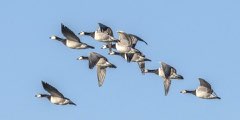 Wadden Sea autumn: geese, waders and whooper swans in the marshBarnacle goose yapping in flocks of tens of thousands over the Ballum marsh, brent geese growling on the flats, golden plover flocks whistling, whooper swan families bugling on the polders at night, curlew; the tide.
 Pink-footed goose dawn flightsTens of thousands of geese lifting off the mudflats at first light in a wall of 'wink-wink' calls, wave after wave overhead.
 Whooper swans & barnacle geeseBugling whoopers and yapping barnacle flocks like a huge crowd; the whole Svalbard barnacle population is on one estuary.
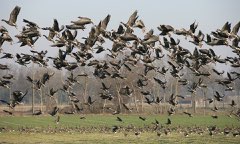 Arctic geese on the Lower RhineWhite-fronted geese's high yelping in skeins of thousands, bean geese's deeper 'kayak', the roar of a roost lifting off the Rhine at first light, whooper swans on the Bislicher Altrhein; barges and the A57 underneath.
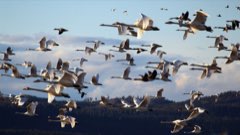 Lower Oder Valley: whooper swans, geese and the flooded poldersWhooper swan bugling in chorus over the polder ice-edge, geese lifting at dawn by the thousand, smew and goldeneye wing-whistle, eagle yelps; in October, cranes; in May, corncrakes at night.
 Wintering cranes at ArjuzanxWaves of cranes dropping into the flooded roost after dark, a continuous rolling chorus that carries for kilometres over the pine plantations.
More: all spectacles in The Gambia · winter geese, swans and ducks · The Gambia in January · The Gambia in February · The Gambia in December