
Oostkustpolders: pink-footed and white-fronted geese of the Flemish coast
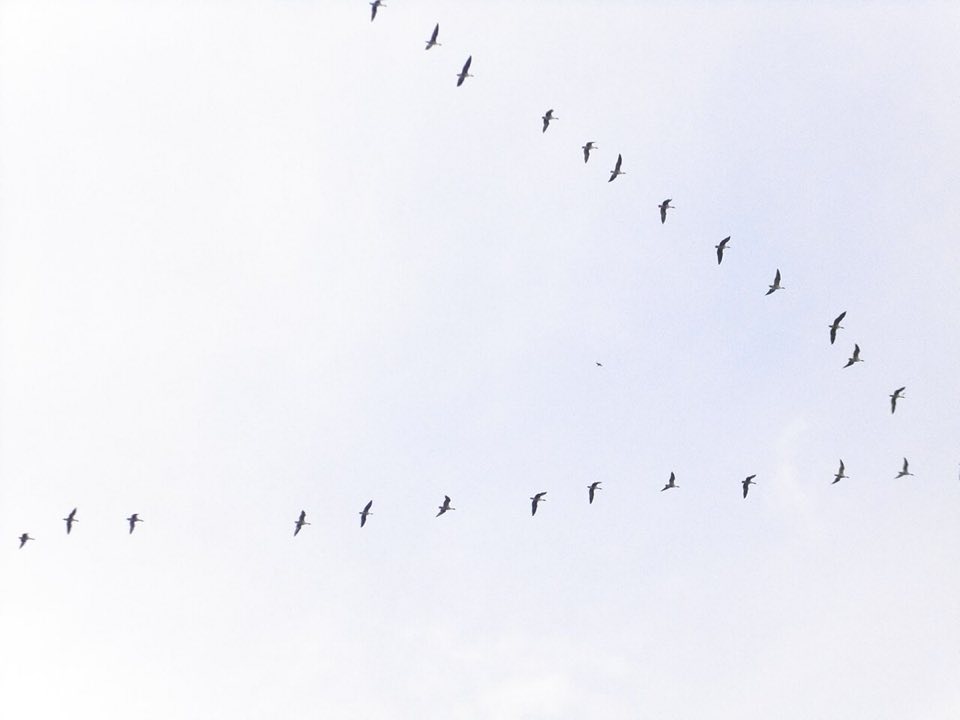
Pink-footed goose (Svalbard population — tens of thousands), greater white-fronted goose, greylag, barnacle goose, wigeon, short-eared owl; waterbird counts can exceed 100,000. Uitkerkse Polder, Damme, Meetkerke, Zuienkerke, Klemskerke — the polders between Blankenberge and Bruges, Belgium.
Best time: 20 Nov – 20 Jan (November to January). Where: Bezoekerscentrum Uitkerkse Polder (Natuurpunt), Kuiperscheeweg 20, Blankenberge, Sint-Amanduskerk, Uitkerke (walk start), Damme polders (Damse Vaart) (Belgium). Time of day: Geese fly from the coastal roosts to the polder grassland in the 40 minutes around sunrise and back in the half hour after sunset.
- You can go on your own
- Free
- Telescope recommended
- Sound 4/5
Open it in the interactive calendarSunrise and sunset listening times for the day you pick, and the map.
When is the best time?
Peak: 20 Nov – 20 Jan. Late November to mid January; first pink-feet arrive late Oct/early Nov, the winter peak falls late Dec–early Jan, and most pink-feet move on by mid February
Active from 1 Nov to 20 Feb (November to February) in a typical year.
Time of day
Geese fly from the coastal roosts to the polder grassland in the 40 minutes around sunrise and back in the half hour after sunset; through the day they graze in dense flocks on the wet meadows. Frost and east wind bring the biggest numbers.
- Dawn arrival on the polders: 30 min before sunrise → 1 h after sunrise
- Evening flight to roost: 30 min before sunset → 20 min after last light
What will you hear?
The high, yelping chorus of thousands of pink-footed geese on the meadows and the roar when a flock lifts at a harrier; white-fronts' laughing calls; wigeon whistling; skylarks and lapwings in mild spells.
Binoculars?
Telescope recommended. Flocks sit 100–500 m from the farm roads; the visitor centre lends binoculars free. The sound of a lifting flock needs nothing.
Where to go
- Bezoekerscentrum Uitkerkse Polder (Natuurpunt), Kuiperscheeweg 20, Blankenberge — Free parking for 45 cars; 'Lepelaar' viewing wall; signed walks of 4.7–11.4 km; free binocular loan; goose season 15 Nov–15 Feb. Map
- Sint-Amanduskerk, Uitkerke (walk start) — Start of the Uitkerkse Polder walking routes, 1.7 km from the centre. Map
- Damme polders (Damse Vaart) — Historic core of the goose wintering since 1958; farm roads and the canal towpath. Map
- Meetkerke / Zuienkerke polders — Open meadow polders between Bruges and the coast, viewed from public farm roads. Map
How to go on your own, and what it costs
Train/tram to Blankenberge, or drive to the Uitkerkse Polder visitor centre (free car park); walk the signed Oranje (11 km, wheelchair-friendly) or Groene (4.7 km) routes, or cycle the 40 km goose loop and the 46 km route to Bezoekerscentrum Brugs Polderland in Damme. Everything is on public roads and paths, free, open at all hours; dogs on leads.
Cost: Free.
Who runs access
- Natuurpunt – Uitkerkse Polder guided walks (NGO) — Guide for groups up to 20; request at least one month ahead.
Field-recording notes
The polders are public farm roads with tractors and through traffic; the Natuurpunt walking routes get off the busiest lanes. Flocks are shy — record from the car as a hide or from the Lepelaar wall; a flock lifting at 300 m is the sound. The coast road, Zeebrugge port and the Blankenberge tram are the noise floor; inland towards Damme is quieter. Goose numbers have fallen since the 2010 record (48,000 pink-feet) and vary with the winter — check the INBO/Natuurpunt counts. Hunting: waterfowl shooting occurs in parts of the polders outside the reserves.
Sources
- Natuurpunt – Uitkerkse Polder (goose season, routes, visitor centre)
- VLIZ – wintering geese of the Oostkustpolders (long-term counts)
Similar spectacles
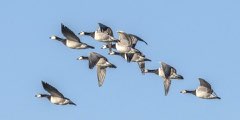 Wadden Sea autumn: geese, waders and whooper swans in the marshBarnacle goose yapping in flocks of tens of thousands over the Ballum marsh, brent geese growling on the flats, golden plover flocks whistling, whooper swan families bugling on the polders at night, curlew; the tide.
 Pink-footed goose dawn flightsTens of thousands of geese lifting off the mudflats at first light in a wall of 'wink-wink' calls, wave after wave overhead.
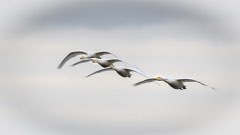 Whooper swans & barnacle geeseBugling whoopers and yapping barnacle flocks like a huge crowd; the whole Svalbard barnacle population is on one estuary.
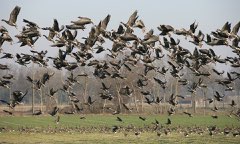 Arctic geese on the Lower RhineWhite-fronted geese's high yelping in skeins of thousands, bean geese's deeper 'kayak', the roar of a roost lifting off the Rhine at first light, whooper swans on the Bislicher Altrhein; barges and the A57 underneath.
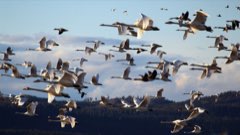 Lower Oder Valley: whooper swans, geese and the flooded poldersWhooper swan bugling in chorus over the polder ice-edge, geese lifting at dawn by the thousand, smew and goldeneye wing-whistle, eagle yelps; in October, cranes; in May, corncrakes at night.
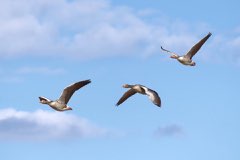 Goose autumn at the Lange Lacke, SeewinkelGeese in skeins of thousands crossing the pastures at dusk, greylag chatter on the soda lake roost through the night, cranes trumpeting overhead in late October, eagle calls; the salt-steppe silence in between.
More: all spectacles in Belgium · wild geese · winter geese, swans and ducks · January · November · December