
First-rains frog chorus of the Liberian forest zone
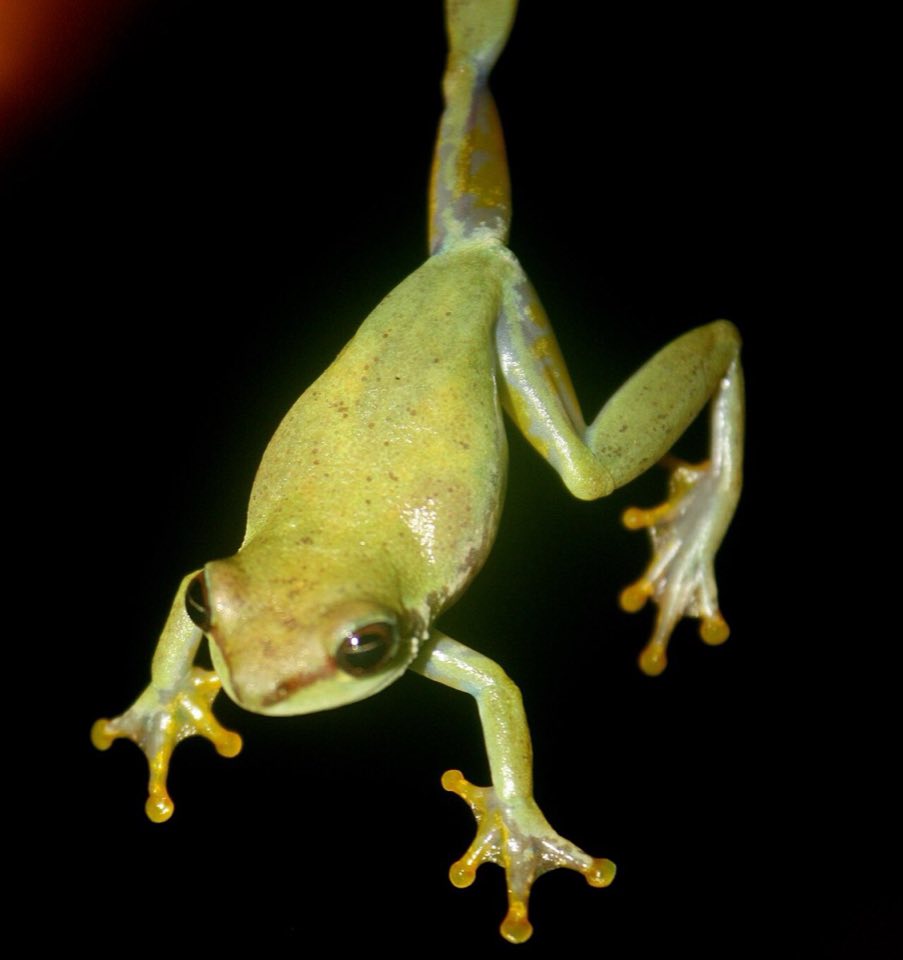
Reed frogs (Hyperolius), tree frogs (Leptopelis), running frogs (Kassina), grass frogs (Ptychadena), Hoplobatrachus, forest toads (Sclerophrys), with tree hyrax and nightjars. Whole country — most accessible on the Monrovia–Gbarnga and Robertsport roads, Liberia.
Best time: 1 May – 30 Jun (May to June). Where: Robertsport road swamps (Grand Cape Mount), Kpatawee waterfall & wetlands (Bong), Gbedin wetlands (Nimba) (Liberia). Time of day: Dusk to about 01:00, loudest in the 2 hours after rain.
- You can go on your own
- Free
- No binoculars needed
- Sound 5/5
Open it in the interactive calendarSunrise and sunset listening times for the day you pick, and the map.
When is the best time?
Peak: 1 May – 30 Jun. May–June, the nights after the first big storms and before the deluge sets in
Active from 15 Apr to 31 Aug (April to August) in a typical year.
Time of day
Dusk to about 01:00, loudest in the 2 hours after rain
- Night chorus: sunset → 01:00
What will you hear?
The heaviest rains on the flyway coast produce some of its loudest amphibian nights — reed frogs, running frogs and tree frogs in every roadside pool and rice swamp, with thunder rolling in from the Atlantic.
Binoculars?
No binoculars needed. Chorus from roadside swamps after rain; a torch, not binoculars.
Where to go
- Robertsport road swamps (Grand Cape Mount) — Roadside swamps and rice fields between the Bomi road and the lake. Map
- Kpatawee waterfall & wetlands (Bong) — Ramsar site (2024) near Gbarnga with forest pools and the falls. Map
- Gbedin wetlands (Nimba) — Ramsar rice-swamp site near Ganta; very loud choruses. Map
How to go on your own, and what it costs
Any roadside pool after rain; no fee, no guide. Kpatawee has a small community fee for the falls in daytime.
Cost: Free (2026); Kpatawee falls small community fee — check current prices.
Field-recording notes
Liberia's rainy season is the wettest in West Africa: 100% humidity, sudden floods, lightning. Desiccant, dry-bags, a rain cover on the rig and a plan to stop. Roads to Kpatawee and Gbedin are passable early in the season. Nobody minds a night by a rice swamp; tell the village.
Sources
Similar spectacles
 Natterjack toad chorusThe loudest amphibian in Britain — a rolling, ratcheting chorus audible up to 2 km away across dunes.
 Natterjack toad chorus on the Kerry dunesA loud, ratcheting 'rrrrRup, rrrrRup' chorus from dozens of males in shallow dune pools — the loudest amphibian in these islands — with the Atlantic surf behind the dunes and snipe overhead.
 Tree frog choruses of Zeeuws-VlaanderenA rattling, surprisingly loud 'kè-kè-kè-kè' chorus from hundreds of tree frogs around the old fortress moats and pools — audible across the polder — with marsh frogs and nightingales behind; the ramparts of Retranchement alone hold a few hundred.
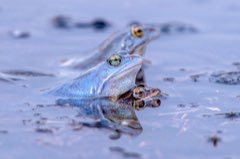 Fire-bellied toads, natterjacks and blue moor frogsFire-bellied toad's melancholy 'uh...uh' by the hundred over shallow pasture ponds, moor frog's bubbling 'waug-waug' underwater chorus, natterjack's ratcheting trill carrying 2 km across dune slacks, tree frogs at full volume, bittern and crane in the background.
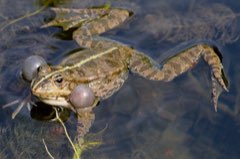 Marsh frog & tree frog chorusesWall-to-wall marsh frog laughter from the Camargue ditches, ratcheting tree frogs from Brenne ponds, and natterjacks rolling across the Landes dune slacks.
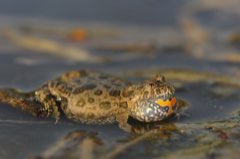 Frog nights in the Danube floodplain forestTree frog volleys and fire-bellied toads' soft hooting from the oxbows (Altarme), marsh frog laughter, night herons croaking overhead, nightingale and beaver tail-slaps; Danube barges as a slow low bed.
More: all spectacles in Liberia · frog and toad choruses · May · June