
Natterjack toad chorus on the Kerry dunes
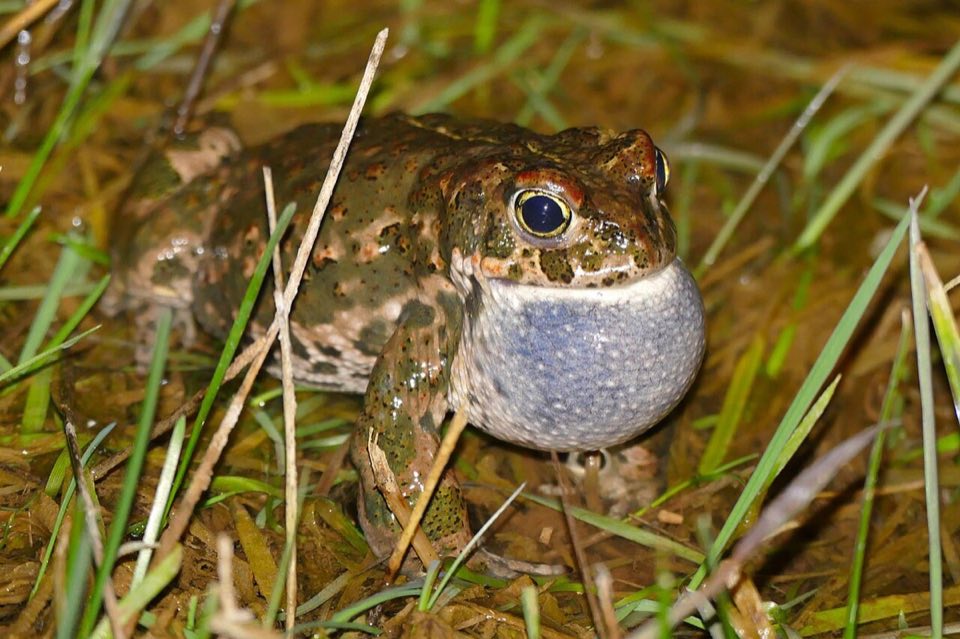
Natterjack toad (Epidalea calamita) — Ireland's only toad, fewer than 10,000 adults on the Dingle and Iveragh coasts. Castlegregory / Maharees, Inch and Rossbehy (Castlemaine Harbour), Co. Kerry, Ireland.
Best time: 20 Apr – 25 May (April to May). Where: Castlegregory dunes and Lough Gill (Maharees), Inch Strand dunes, Rossbehy, Glenbeigh (Castlemaine Harbour) (Ireland). Time of day: Males start as it gets dark, about 30–45 min after sunset, and call for several hours on mild (over ~8 °C), still nights.
- You can go on your own
- Free
- No binoculars needed
- Sound 5/5
Open it in the interactive calendarSunrise and sunset listening times for the day you pick, and the map.
When is the best time?
Peak: 20 Apr – 25 May. Late April to late May; activity and calling normally begin around mid April, mild damp nights only
Active from 10 Apr to 10 Jun (April to June) in a typical year.
Time of day
Males start as it gets dark, about 30–45 min after sunset, and call for several hours on mild (over ~8 °C), still nights; cold or wet evenings are silent.
- Night chorus (mild nights): 30 min after sunset → 01:00
What will you hear?
A loud, ratcheting 'rrrrRup, rrrrRup' chorus from dozens of males in shallow dune pools — the loudest amphibian in these islands — with the Atlantic surf behind the dunes and snipe overhead.
Binoculars?
No binoculars needed. The rasping chorus carries kilometres across the dunes; a red torch at the pond edge shows the inflated throat sacs. No binoculars.
Where to go
- Castlegregory dunes and Lough Gill (Maharees) — Breeding pools in the dune slacks and around the lake; public paths and the Maharees road; the main population. Map
- Inch Strand dunes — Dune slack pools behind the beach; car park at the beach entrance; release site of the NPWS/Fota captive-bred toadlets. Map
- Rossbehy, Glenbeigh (Castlemaine Harbour) — Dune spit with breeding pools on the south side of the harbour. Map
How to go on your own, and what it costs
Drive to Castlegregory (R560) and out onto the Maharees road or the lanes to Lough Gill; park at the beach/road ends and walk the dune paths after dark. Inch: park at the beach car park and walk the dunes. Rossbehy: car park at the end of the beach road from Glenbeigh. All free, no hours.
Cost: Free.
Field-recording notes
Natterjacks are strictly protected (Habitats Directive, Wildlife Acts): do not enter the pools, handle toads or use playback. Stay on paths — dune slacks are fragile and the pools are on grazed farmland in places. Noise is almost nil at night; the surf is the backdrop and the Maharees road has little traffic. Weather is everything — a 'boom or bust' species that will not sing in cold wind; pick a mild, damp, still evening after a warm day.
Sources
- NPWS – The natterjack toad, living on the edge (leaflet: calling from mid April, range)
- Castlegregory.ie – Natterjack toad
- NPWS – captive-bred natterjack toadlets released (status, <10,000)
Similar spectacles
 Natterjack toad chorusThe loudest amphibian in Britain — a rolling, ratcheting chorus audible up to 2 km away across dunes.
 Tree frog choruses of Zeeuws-VlaanderenA rattling, surprisingly loud 'kè-kè-kè-kè' chorus from hundreds of tree frogs around the old fortress moats and pools — audible across the polder — with marsh frogs and nightingales behind; the ramparts of Retranchement alone hold a few hundred.
 Fire-bellied toads, natterjacks and blue moor frogsFire-bellied toad's melancholy 'uh...uh' by the hundred over shallow pasture ponds, moor frog's bubbling 'waug-waug' underwater chorus, natterjack's ratcheting trill carrying 2 km across dune slacks, tree frogs at full volume, bittern and crane in the background.
 Marsh frog & tree frog chorusesWall-to-wall marsh frog laughter from the Camargue ditches, ratcheting tree frogs from Brenne ponds, and natterjacks rolling across the Landes dune slacks.
 Frog nights in the Danube floodplain forestTree frog volleys and fire-bellied toads' soft hooting from the oxbows (Altarme), marsh frog laughter, night herons croaking overhead, nightingale and beaver tail-slaps; Danube barges as a slow low bed.
 Amphibian chorus of the intermittent lakeWall-to-wall Pelophylax chorus with tree frog 'krak-krak' on top, toad trills, yellow-bellied toad's soft 'poop-poop' from karst puddles, Savi's warbler and bittern in the mix.
More: all spectacles in Ireland · frog and toad choruses · April · Ireland in May