
First-rains frog chorus of the Guinean savanna and forest
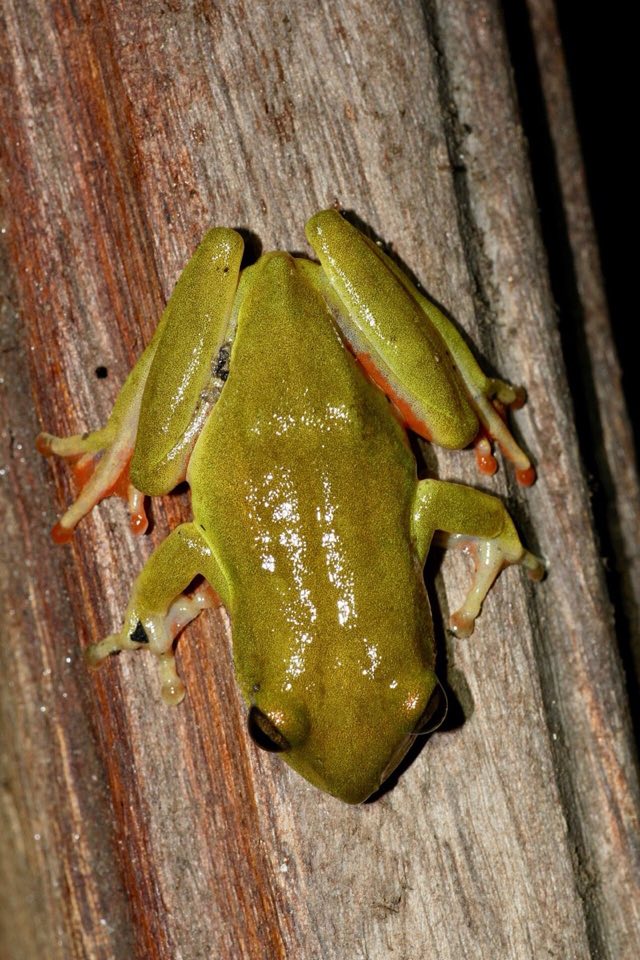
Reed frogs (Hyperolius), running frogs (Kassina), grass frogs (Ptychadena), tree frogs (Leptopelis), Hoplobatrachus, toads; the Nimba viviparous toad in the highlands. Whole country — most accessible around Kindia, Dalaba, N'Zérékoré, Guinea.
Best time: 15 May – 31 Jul (May to July). Where: Kindia – Chutes de la Voile de la Mariée surroundings, Dalaba plateau ponds, N'Zérékoré rice fields (Guinea). Time of day: Dusk to about 01:00, loudest in the 2 hours after a downpour.
- You can go on your own
- Free
- No binoculars needed
- Sound 5/5
Open it in the interactive calendarSunrise and sunset listening times for the day you pick, and the map.
When is the best time?
Peak: 15 May – 31 Jul. The nights after the first storms (mid May to July); the rains here are among the heaviest in West Africa
Active from 1 May to 30 Sep (May to September) in a typical year.
Time of day
Dusk to about 01:00, loudest in the 2 hours after a downpour
- Night chorus: sunset → 01:00
What will you hear?
Wall-to-wall reed frogs, running frogs' bell notes and tree frogs from every flooded field and forest pool; thunder and rain are part of the take.
Binoculars?
No binoculars needed. Chorus from any roadside pool after rain; a torch, not binoculars.
Where to go
- Kindia – Chutes de la Voile de la Mariée surroundings — Forested falls area 2 hours from Conakry; pools and wet forest. Map
- Dalaba plateau ponds — Cold highland ponds; a different assemblage. Map
- N'Zérékoré rice fields — Forest-zone rice paddies; very loud choruses. Map
How to go on your own, and what it costs
Any roadside pool or rice field after rain; no fee, no guide.
Cost: Free (2026).
Field-recording notes
Rainy-season rules: humidity at 100%, desiccant, rain covers, lightning plan. Roads become rivers in July. Nobody minds a night by a rice field; tell the village.
Sources
Similar spectacles
 Natterjack toad chorusThe loudest amphibian in Britain — a rolling, ratcheting chorus audible up to 2 km away across dunes.
 Natterjack toad chorus on the Kerry dunesA loud, ratcheting 'rrrrRup, rrrrRup' chorus from dozens of males in shallow dune pools — the loudest amphibian in these islands — with the Atlantic surf behind the dunes and snipe overhead.
 Tree frog choruses of Zeeuws-VlaanderenA rattling, surprisingly loud 'kè-kè-kè-kè' chorus from hundreds of tree frogs around the old fortress moats and pools — audible across the polder — with marsh frogs and nightingales behind; the ramparts of Retranchement alone hold a few hundred.
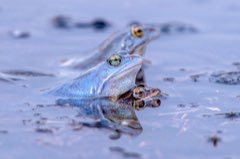 Fire-bellied toads, natterjacks and blue moor frogsFire-bellied toad's melancholy 'uh...uh' by the hundred over shallow pasture ponds, moor frog's bubbling 'waug-waug' underwater chorus, natterjack's ratcheting trill carrying 2 km across dune slacks, tree frogs at full volume, bittern and crane in the background.
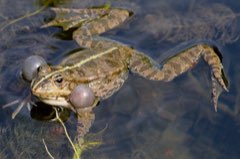 Marsh frog & tree frog chorusesWall-to-wall marsh frog laughter from the Camargue ditches, ratcheting tree frogs from Brenne ponds, and natterjacks rolling across the Landes dune slacks.
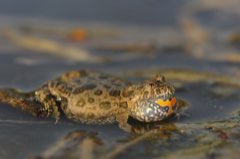 Frog nights in the Danube floodplain forestTree frog volleys and fire-bellied toads' soft hooting from the oxbows (Altarme), marsh frog laughter, night herons croaking overhead, nightingale and beaver tail-slaps; Danube barges as a slow low bed.
More: all spectacles in Guinea · frog and toad choruses · May · June · July