
First-rains frog chorus of the Gambian rice fields and forest pools
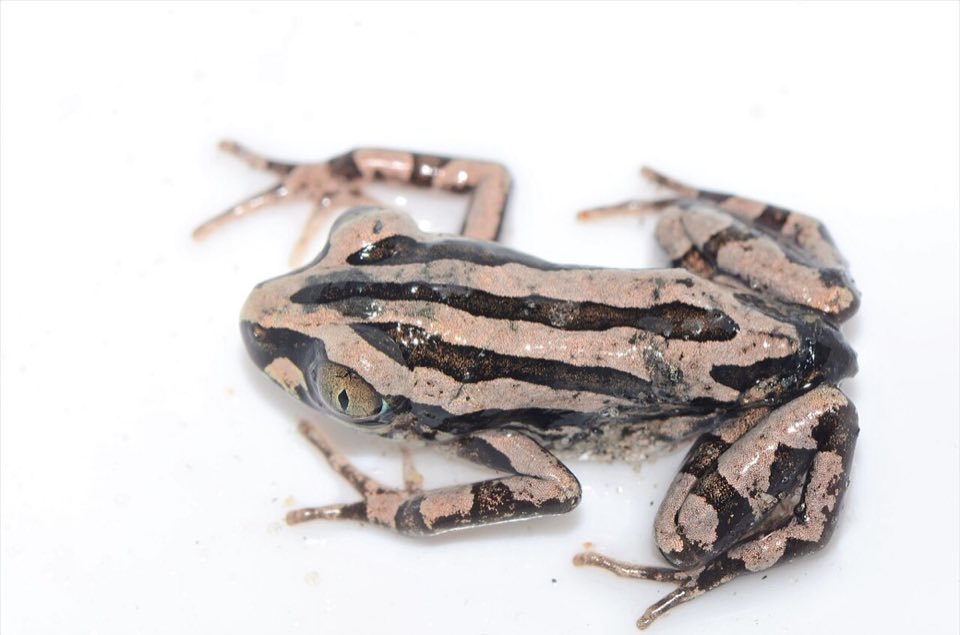
African bullfrog-type choruses of Ptychadena grass frogs, Senegal running frog (Kassina senegalensis), Hoplobatrachus occipitalis, Leptopelis tree frogs, Hyperolius reed frogs; toads (Sclerophrys). Whole country — Abuko, Kotu rice fields, Pirang, Tendaba, The Gambia.
Best time: 15 Jun – 15 Aug (June to August). Where: Kotu rice fields & sewage ponds, Abuko Nature Reserve pools, Pirang forest & shrimp ponds (The Gambia). Time of day: From dusk to about 01:00, loudest in the 2 hours after a downpour.
- You can go on your own
- Free
- No binoculars needed
- Sound 5/5
Open it in the interactive calendarSunrise and sunset listening times for the day you pick, and the map.
When is the best time?
Peak: 15 Jun – 15 Aug. The nights after the first heavy rains (mid June to mid August) — the whole floodplain sings
Active from 1 Jun to 30 Sep (June to September) in a typical year.
Time of day
From dusk to about 01:00, loudest in the 2 hours after a downpour
- Night chorus: sunset → 01:00
What will you hear?
One of the great mass amphibian choruses: the running frog's popping bell notes in thousands, the whirr of reed frogs, grass frogs' rattles and the bass of Hoplobatrachus from flooded rice and forest pools, with the rain itself and the end-of-day thunder.
Binoculars?
No binoculars needed. Chorus from the rice-field edge; a torch finds reed frogs, nothing else.
Where to go
- Kotu rice fields & sewage ponds — Behind the hotels; loud with tourism but the chorus overwhelms it. Map
- Abuko Nature Reserve pools — Forest-pool chorus; the reserve closes at dusk, so it's from the road or by arrangement. Map
- Pirang forest & shrimp ponds — Community forest and abandoned shrimp farm south of the airport; big reed-frog chorus. Map
How to go on your own, and what it costs
Any roadside rice field or pool after rain; Kotu is walkable from the hotels, Pirang by taxi. No fee, no guide.
Cost: Free (2026).
Field-recording notes
Rainy-season fieldcraft: 95% humidity, everything wet, condensation at every temperature change — desiccant in the bag, capsules under a rain cover, and a plan for lightning. Thunder rolls are part of the sound. Mosquitoes are serious; the roads to Pirang and Tendaba flood. Nobody objects to a night by the rice fields; tell the village. The Senegalese side of the border has the same chorus.
Sources
Similar spectacles
 Marsh frog & tree frog chorusesWall-to-wall marsh frog laughter from the Camargue ditches, ratcheting tree frogs from Brenne ponds, and natterjacks rolling across the Landes dune slacks.
 Amphibian chorus of the intermittent lakeWall-to-wall Pelophylax chorus with tree frog 'krak-krak' on top, toad trills, yellow-bellied toad's soft 'poop-poop' from karst puddles, Savi's warbler and bittern in the mix.
 Tree frog & water frog chorusDeafening tree frog 'kra-kra-kra' choruses, with the laughing croaks of water frogs from rice paddies and ditches.
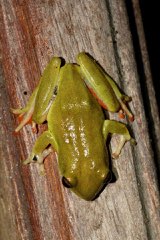 First-rains frog chorus of the Guinean savanna and forestWall-to-wall reed frogs, running frogs' bell notes and tree frogs from every flooded field and forest pool; thunder and rain are part of the take.
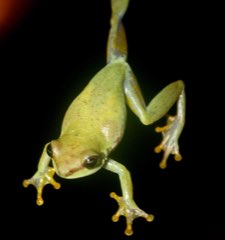 First-rains frog chorus of the Liberian forest zoneThe heaviest rains on the flyway coast produce some of its loudest amphibian nights — reed frogs, running frogs and tree frogs in every roadside pool and rice swamp, with thunder rolling in from the Atlantic.
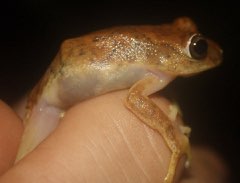 Rainy-season frog chorus at TaïDense stacked choruses of Hyperolius and Afrixalus over the pools, the hammering of Leptopelis and the metallic ticking of puddle frogs from the leaf litter, with katydids above them.
More: all spectacles in The Gambia · frog and toad choruses · June · July · August