
Bobiri forest: four hundred butterfly species on a May morning
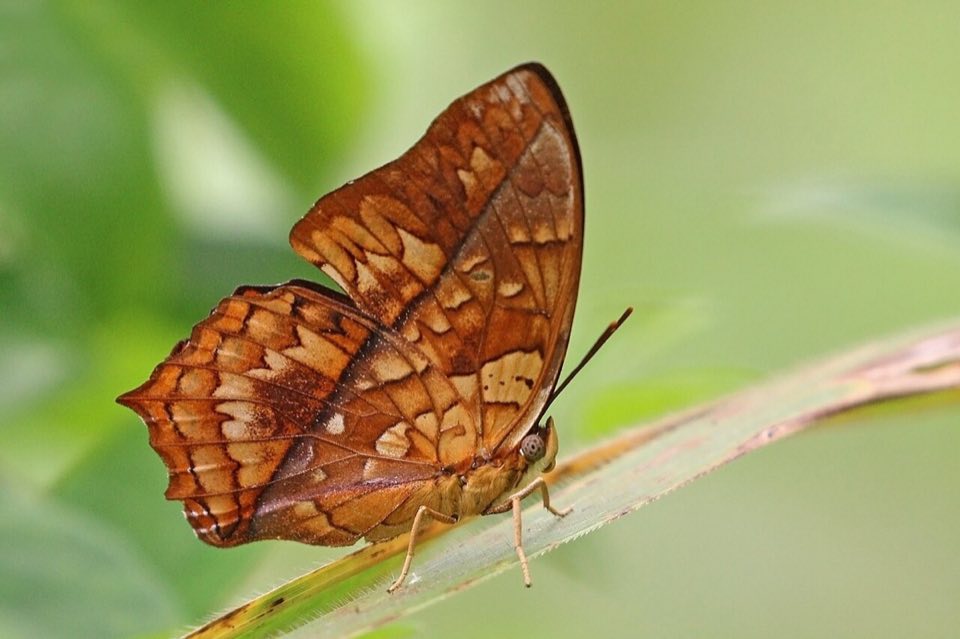
About 400 butterfly species — charaxes, swallowtails (Papilio and Graphium), Cymothoe, Euphaedra, blues and skippers — in a 55 km² moist semi-deciduous forest reserve; hornbills, greenbuls and monkeys at dawn. Bobiri Forest Reserve and Butterfly Sanctuary, Kubease, Ashanti Region, Ghana.
Best time: 1 May – 31 May (May). Where: Bobiri – visitor centre and forest guesthouse, Kubease – junction on the Accra–Kumasi highway (Ghana). Time of day: Butterflies are on the trails and the forest road from about 10:30 to 16:00 on warm sunny days, peaking around midday on the puddles and sunlit gaps.
- You can go on your own
- Low cost
- No binoculars needed
- Sound 2/5
Open it in the interactive calendarSunrise and sunset listening times for the day you pick, and the map.
When is the best time?
Peak: 1 May – 31 May. May, when the sanctuary records the most butterflies on the wing; March to June is the main window, with a long tail through the second rains to October
Active from 1 Mar to 30 Jun (March to June) in a typical year.
Time of day
Butterflies are on the trails and the forest road from about 10:30 to 16:00 on warm sunny days, peaking around midday on the puddles and sunlit gaps; the sanctuary opens 06:00 and the dawn chorus from the guesthouse is a separate, free hour
- Forest dawn: 20 min before sunrise → 08:00
- Butterflies on the wing: 10:30 → 16:00
What will you hear?
Mostly a visual spectacle: clouds of blues and swallowtails on the wet road, charaxes crashing into fermenting fruit. But the forest at dawn from the guesthouse veranda — hornbills, greenbuls, the whistles of the forest robin, cicadas at first light — is a genuine Upper Guinea chorus 30 km from Kumasi.
Binoculars?
No binoculars needed. Butterflies are at your feet on the puddles and road; close-focus binoculars or a macro lens are the useful optics.
Where to go
- Bobiri – visitor centre and forest guesthouse — The CSIR Forestry Research Institute's guesthouse and the sanctuary office, 3.5 km of dirt from the Kubease junction; trails start here. Map
- Kubease – junction on the Accra–Kumasi highway — Where the tro-tro drops you; taxi or a 3.5 km walk to the forest. Map
How to go on your own, and what it costs
Tro-tro from Kumasi (via Ejisu) or from Accra to Kubease on the main highway, then a taxi or the 3.5 km walk on the unpaved road to the visitor centre; pay at the office, walk the trails alone or with a guide; sleep in the forest guesthouse for the dawn.
Cost: Entry and guide fees are not listed online — a few tens of cedis; guesthouse rooms budget. Check current prices at the office.
Field-recording notes
A forest reserve with a research station: no permit needed for the trails, a small fee at the office, and the guesthouse means you are in the forest at dawn. The highway is 3.5 km away and audible as a faint bed at night; the forest interior is clean. Hikes run 06:00–16:00. Butterflies need sun after rain — a wet morning followed by sun is the day. Mosquito nets, an onsite cook; carry water.
Sources
- Visit Ghana – Bobiri Forest and Butterfly Sanctuary (March–June, May peak, 11:00–16:00; access, guesthouse)
- Bobiri Butterfly Sanctuary (Wikipedia)
Similar spectacles
 Firefly nightsA visual spectacle: synchronised flashing over meadows. For sound, the early-summer night ambience — crickets, nightingales, and scops owls.
 Cicadas of ProvenceThe Provence cliché done properly: Lyristes' continuous saw at 100+ dB from the pines, Cicada orni's pulsing ticks from the oaks, and a shift of species with the hour and the tree.
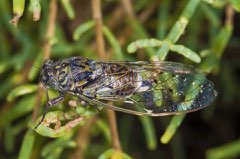 Cicada summer of the Adriatic coastContinuous Cicada orni ticking at 5–8 kHz merging into a shimmer, Lyristes plebejus's louder pulsing song from pines, cricket chorus at night, scops owl, sea.
 Cicada summer chorusWall-of-sound cicada chorus in pinewoods and olive groves, with pulsing, overlapping rhythms of different species.
 Cicadas of the Spanish pinewoodsContinuous cicada chorus from Aleppo and stone pines — Cicada orni's ticking pulses over Lyristes' saw — with the sea and, at dusk, bush-crickets taking over.
 Cicadas of Ticino and the Valais rock steppesCicada orni ticking merging into a wall in the chestnut and oak woods, Lyristes pulsing from pines, grasshoppers on the steppe; in the Valais, bee-eaters and a föhn wind.
More: all spectacles in Ghana · cicadas, crickets and fireflies · Ghana in May