
Spring frog & toad choruses of the Andalusian marshes
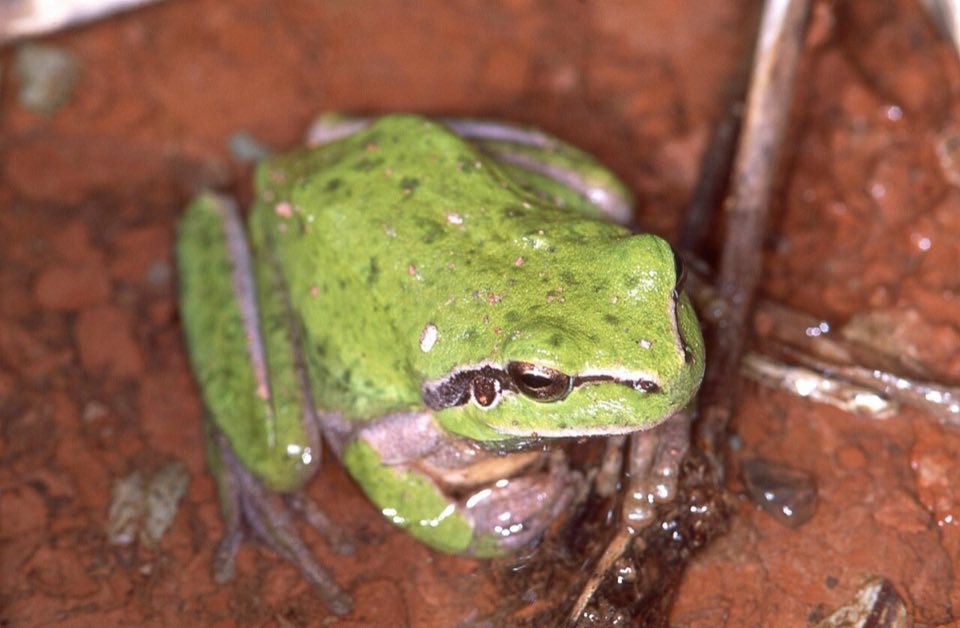
Perez's frog (Pelophylax perezi), Mediterranean tree frog (Hyla meridionalis), natterjack, Iberian spadefoot, western spadefoot, parsley frog. Doñana buffer, Odiel, Cádiz lagoons, Spain.
Best time: 15 Mar – 10 May (March to May). Where: El Rocío – Madre de las Marismas boardwalk, Dehesa de Abajo, La Puebla del Río, Marismas del Odiel (Huelva) (Spain). Time of day: Choruses start at dusk, reach full volume 1–2 h after dark and run to about 02:00 on mild nights.
- You can go on your own
- Free
- No binoculars needed
- Sound 5/5
Open it in the interactive calendarSunrise and sunset listening times for the day you pick, and the map.
When is the best time?
Peak: 15 Mar – 10 May. Mid March to early May, warm humid nights after rain
Active from 15 Feb to 15 Jun (February to June) in a typical year.
Time of day
Choruses start at dusk, reach full volume 1–2 h after dark and run to about 02:00 on mild nights; spadefoots call underwater in the same window.
- Night chorus: 30 min after sunset → 02:00
What will you hear?
Massive Perez's frog choruses from the temporary lagoons, tree frog 'crra-crra' from the marsh edge, natterjack ratchets across the dune slacks, spadefoots' hen-like clucking from underwater, plus stone-curlews, red-necked nightjars and scops owls.
Binoculars?
No binoculars needed. Chorus from the boardwalk after dark; a red torch finds frogs, nothing else needed.
Where to go
- El Rocío – Madre de las Marismas boardwalk — Village-edge marsh, easy night access on foot; horses and dogs. Map
- Dehesa de Abajo, La Puebla del Río — Lagoon and rice-field ditches; car park closes but the road verge is open. Map
- Marismas del Odiel (Huelva) — Saltmarsh and freshwater pools; industrial hum from the Huelva petrochemical pole to the east. Map
How to go on your own, and what it costs
El Rocío: walk the Madre de las Marismas boardwalk from the village after dark — free. Dehesa de Abajo: the car park closes but the road verge by the lagoon is open. Odiel: the public road across the marshes from Huelva; the visitor centre has daytime hours.
Cost: Free.
Field-recording notes
Rainfall drives everything — after a wet February the temporary lagoons erupt; in drought years there is little. Spadefoots call from underwater: a hydrophone in a shallow pool is the way. All species are protected — no capture. Mosquitoes arrive with the water.
Sources
Similar spectacles
 Natterjack toad chorusThe loudest amphibian in Britain — a rolling, ratcheting chorus audible up to 2 km away across dunes.
 Natterjack toad chorus on the Kerry dunesA loud, ratcheting 'rrrrRup, rrrrRup' chorus from dozens of males in shallow dune pools — the loudest amphibian in these islands — with the Atlantic surf behind the dunes and snipe overhead.
 Tree frog choruses of Zeeuws-VlaanderenA rattling, surprisingly loud 'kè-kè-kè-kè' chorus from hundreds of tree frogs around the old fortress moats and pools — audible across the polder — with marsh frogs and nightingales behind; the ramparts of Retranchement alone hold a few hundred.
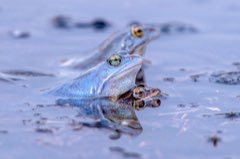 Fire-bellied toads, natterjacks and blue moor frogsFire-bellied toad's melancholy 'uh...uh' by the hundred over shallow pasture ponds, moor frog's bubbling 'waug-waug' underwater chorus, natterjack's ratcheting trill carrying 2 km across dune slacks, tree frogs at full volume, bittern and crane in the background.
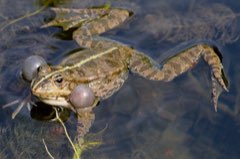 Marsh frog & tree frog chorusesWall-to-wall marsh frog laughter from the Camargue ditches, ratcheting tree frogs from Brenne ponds, and natterjacks rolling across the Landes dune slacks.
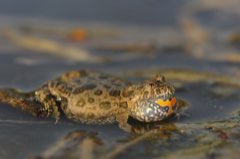 Frog nights in the Danube floodplain forestTree frog volleys and fire-bellied toads' soft hooting from the oxbows (Altarme), marsh frog laughter, night herons croaking overhead, nightingale and beaver tail-slaps; Danube barges as a slow low bed.
More: all spectacles in Spain · frog and toad choruses · Spain in March · Spain in April · Spain in May