
Great bustard display on the Parndorfer Platte and Hanság
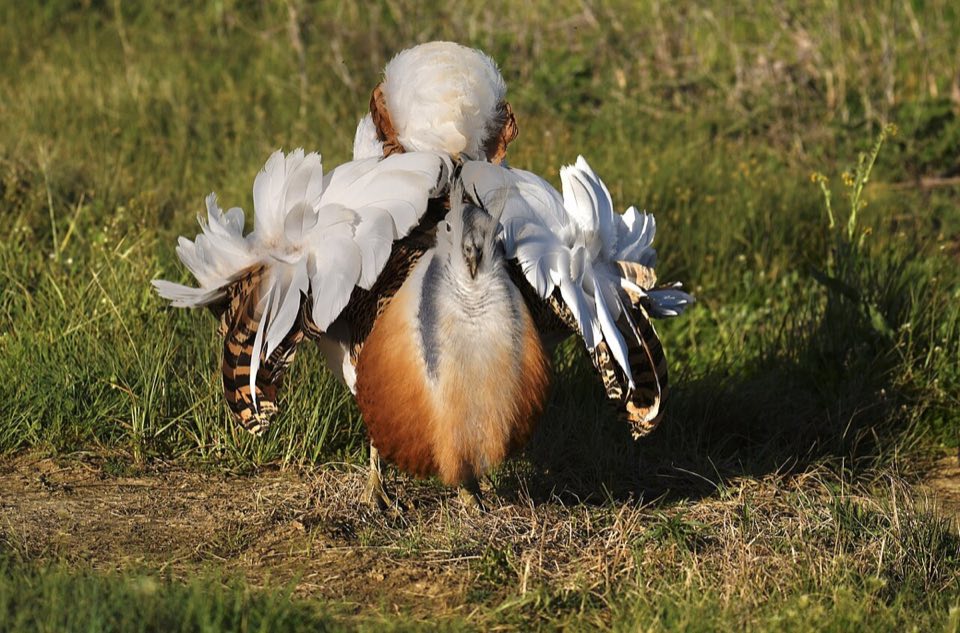
Great bustard (Otis tarda) — c. 600 birds, the largest population west of Hungary; montagu's harrier, short-eared owl, imperial eagle. Andau / Hanság, Parndorfer Platte, Heideboden (Burgenland); Westliches Weinviertel (Lower Austria), Austria.
Best time: 25 Mar – 5 May (March to May). Where: LIFE+ Großtrappe observation tower, Andau (Waasen–Hanság), Parndorfer Platte (Zurndorf – Nickelsdorf), Westliches Weinviertel (Zwingendorf – Alt-Prerau) (Austria). Time of day: Display from about 30 min before sunrise for 2 h, with the steppe chorus at its densest (frost fog lifts about 07:00 in April).
- You can go on your own
- Free
- Telescope recommended
- Sound 1/5
Open it in the interactive calendarSunrise and sunset listening times for the day you pick, and the map.
When is the best time?
Peak: 25 Mar – 5 May. Last week of March to early May, at first light on calm mornings
Active from 10 Mar to 20 May (March to May) in a typical year.
Time of day
Display from about 30 min before sunrise for 2 h, with the steppe chorus at its densest (frost fog lifts about 07:00 in April); a second, shorter bout in the hour before sunset.
- Dawn display: 30 min before sunrise → 2 h after sunrise
- Evening display: 1 h before sunset → sunset
What will you hear?
Bustards are near-silent; the payload is the steppe dawn — skylark, corn bunting, quail, lapwing, grey partridge, crane pairs in the Hanság, marsh harrier, and the reed edge of the Neusiedler See a few kilometres away.
Binoculars?
Telescope recommended. Bustards display 500 m from the Andau tower and are near-silent; a scope is the whole point, the steppe chorus needs nothing.
Where to go
- LIFE+ Großtrappe observation tower, Andau (Waasen–Hanság) — Purpose-built tower south of the Kommassanten meadows; free access; the best legal view of a display ground. Map
- Parndorfer Platte (Zurndorf – Nickelsdorf) — Rolling arable plateau; roadside viewing only; the A4 motorway and wind farms are the backdrop. Map
- Westliches Weinviertel (Zwingendorf – Alt-Prerau) — Smaller population on the Czech border; observation point at Zwingendorf. Map
How to go on your own, and what it costs
Andau tower: drive south from Andau on the Hanság road and park at the signed LIFE+ Großtrappe tower — free, open at all hours; the Zurndorf and Tadten towers are the same. Parndorfer Platte: roadside only. Never walk into the meadows.
Cost: Free.
Field-recording notes
The bustard fields are fenced and the birds flush at 500 m — the tower is the only ethical vantage; no walking into the meadows, no drones (Natura 2000 and Austrian species protection law). Wind turbines are the acoustic problem across the whole Parndorfer Platte (a rhythmic swish in any wind); the Hanság tower is better positioned. Cold, still mornings in April: frost fog lifts at 07:00. Hunting for other species is closed in spring; the area is quiet apart from the A4 and farm traffic.
Sources
- Österreichische Gesellschaft für Großtrappenschutz – observing bustards
- Nationalpark Neusiedler See – Seewinkel
- Blühendes Österreich – Die Großtrappe
Similar spectacles
 Great snipe lek at FokstumyraThe great snipe's extraordinary accelerating clicks, rattles and whistles from a group of males displaying on the bog, ruff males in silent lek nearby, whimbrel bubbling, bluethroat song, cranes bugling, snipe drumming everywhere, willow grouse cackling.
 Capercaillie and black grouse leks in the eastern forestsCapercaillie's clicking, cork-pop and grinding song from pine bog edges, wing-beats of cocks flying in, black grouse bubbling on the open bogs; cranes, whooper swans and Tengmalm's owl in the same nights.
 Black grouse leksBubbling 'rookooing' from displaying males, hissing 'tchu-wee' sneezes and flutter jumps; curlew and snipe often in the same soundscape.
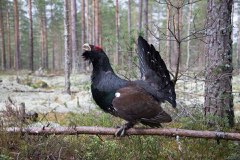 Capercaillie and black grouse — the ones you do not visitThe capercaillie's accelerating clicks, 'cork-pop' and grinding — a very quiet song (audible to ~200 m) that is almost never recorded in Germany without a permit. Black grouse bubbling in the Alps.
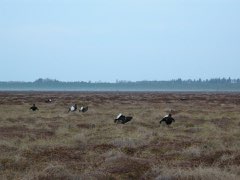 Black grouse leks in the AlpsBubbling 'rookooing' and hissing from males on snow patches at the treeline, ring ouzels, water pipits, and meltwater.
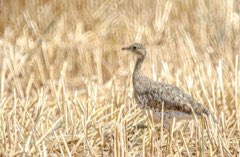 La Crau steppe: little bustard, sandgrouse & stone-curlewLittle bustards' dry 'prrrt' with a foot-stamp and wing-whirr jump, sandgrouse 'catar-catar' flights to drinking pools, calandra larks in continuous song-flight, stone-curlews at dusk.
More: all spectacles in Austria · leks · March · Austria in April · Austria in May