
Great bustard & little bustard display
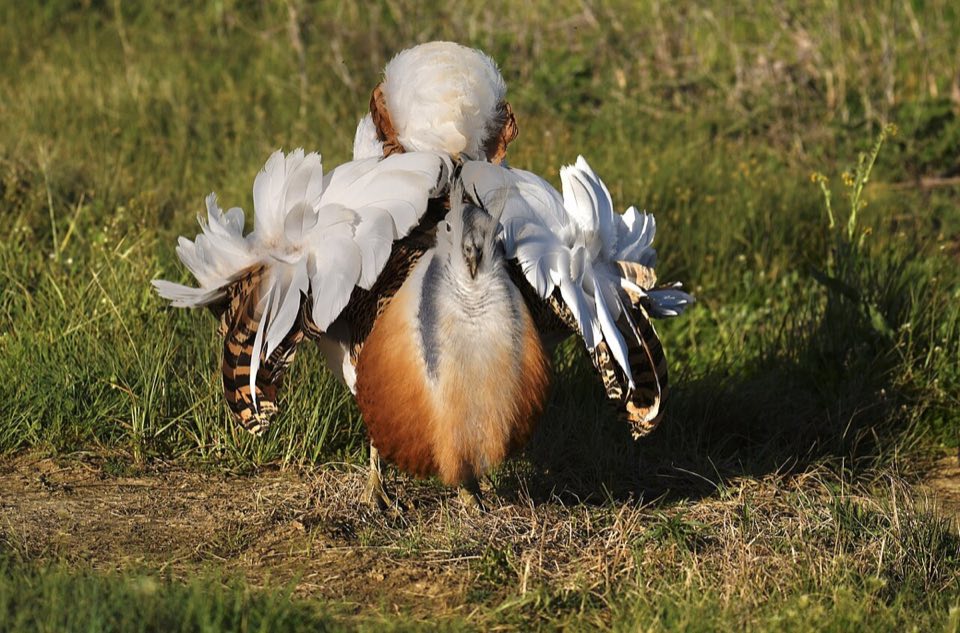
Great bustard (Otis tarda), little bustard (Tetrax tetrax), pin-tailed & black-bellied sandgrouse. Zamora steppes, Llanos de Cáceres, Castilian plains, Spain.
Best time: 20 Mar – 30 Apr (March to April). Where: Villafáfila steppe (Otero de Sariegos – Revellinos road), Llanos de Cáceres – Santa Marta de Magasca, Campo de Calatrava / La Serena (Badajoz) (Spain). Time of day: Display from first light to about 2 h after sunrise, with lark song continuous.
- You can go on your own
- Free
- Telescope recommended
- Sound 3/5
Open it in the interactive calendarSunrise and sunset listening times for the day you pick, and the map.
When is the best time?
Peak: 20 Mar – 30 Apr. Late March to April
Active from 1 Mar to 31 May (March to May) in a typical year.
Time of day
Display from first light to about 2 h after sunrise, with lark song continuous; a second display bout in the hour before sunset, when stone-curlews start.
- Dawn display: 30 min before sunrise → 2 h after sunrise
- Evening display: 1 h before sunset → sunset
What will you hear?
Great bustards are almost silent in display (a low grunt and the rustle of the 'foam bath' plumage), but little bustards give their dry 'prrrt' snort and wing-whistle jump, sandgrouse call in flight and calandra larks sing continuously overhead.
Binoculars?
Telescope recommended. Bustards display 300–500 m from the road and flush if approached; a scope from the car, binoculars minimum.
Where to go
- Villafáfila steppe (Otero de Sariegos – Revellinos road) — One of the world's largest great bustard populations; watch from the roads, the fields are private. Map
- Llanos de Cáceres – Santa Marta de Magasca — ZEPA steppe with great and little bustards, sandgrouse, Montagu's harrier; roadside viewing. Map
- Campo de Calatrava / La Serena (Badajoz) — Vast steppe with little bustard and sandgrouse; hunting estates. Map
How to go on your own, and what it costs
Watch from the car on public roads: the Otero de Sariegos–Revellinos road at Villafáfila, the CC-99 and farm roads around Santa Marta de Magasca (Llanos de Cáceres), the roads across La Serena. Never enter the fields; the birds flush at 300–500 m.
Cost: Free.
Field-recording notes
Great bustards are extremely wary — displaying males flush at 300–500 m and the species is in steep decline, so vehicles-as-hides on public roads only and never walk into the fields. The sound story is the steppe chorus around the lek (calandra larks, little bustard, stone-curlew at dusk); a static rig on a field margin with landowner permission is the ethical option. Wind is constant on the plains.
Sources
Similar spectacles
 Capercaillie and black grouse leks in the eastern forestsCapercaillie's clicking, cork-pop and grinding song from pine bog edges, wing-beats of cocks flying in, black grouse bubbling on the open bogs; cranes, whooper swans and Tengmalm's owl in the same nights.
 Black grouse leksBubbling 'rookooing' from displaying males, hissing 'tchu-wee' sneezes and flutter jumps; curlew and snipe often in the same soundscape.
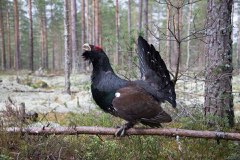 Capercaillie and black grouse — the ones you do not visitThe capercaillie's accelerating clicks, 'cork-pop' and grinding — a very quiet song (audible to ~200 m) that is almost never recorded in Germany without a permit. Black grouse bubbling in the Alps.
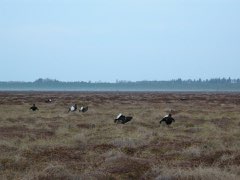 Black grouse leks in the AlpsBubbling 'rookooing' and hissing from males on snow patches at the treeline, ring ouzels, water pipits, and meltwater.
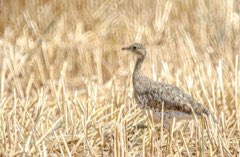 La Crau steppe: little bustard, sandgrouse & stone-curlewLittle bustards' dry 'prrrt' with a foot-stamp and wing-whirr jump, sandgrouse 'catar-catar' flights to drinking pools, calandra larks in continuous song-flight, stone-curlews at dusk.
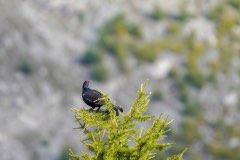 Black grouse leks in the Alps and JuraBubbling 'rookooing' rolling across a snow-patched alpine meadow from several cocks, sneezing 'tchu-shwee' hisses, wing-flutter jumps; ring ouzel and water pipit around them; cowbells not yet arrived.
More: all spectacles in Spain · leks · Spain in March · Spain in April